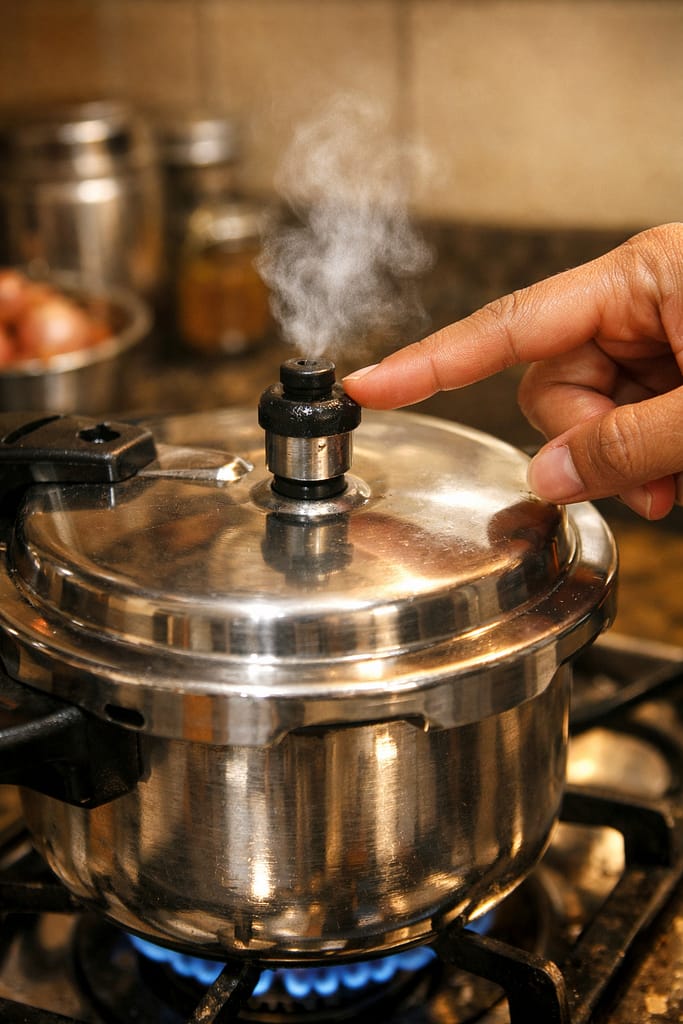
Your pressure cooker should whistle normally while cooking. But if the whistle stops, gets weak, or doesn’t blow at all, your food may remain undercooked or take too long.
This guide explains simple pressure cooker whistle problem fixes you can try at home using beginner-friendly steps, based on user reports and common troubleshooting methods.
Why Is My Pressure Cooker Not Whistling?
Your pressure cooker may not whistle due to low heat, blocked whistle vent, damaged gasket, or steam leakage around the lid. According to support guidelines, pressure won’t build properly if steam escapes or if the whistle vent is clogged with food particles. A quick inspection usually reveals the cause.
Common Reasons
- Food stuck in the whistle/vent
- Worn-out rubber gasket
- Low flame or insufficient water
- Lid not sealed correctly
- Safety valve partially blocked
How to Fix a Blocked Pressure Cooker Whistle?
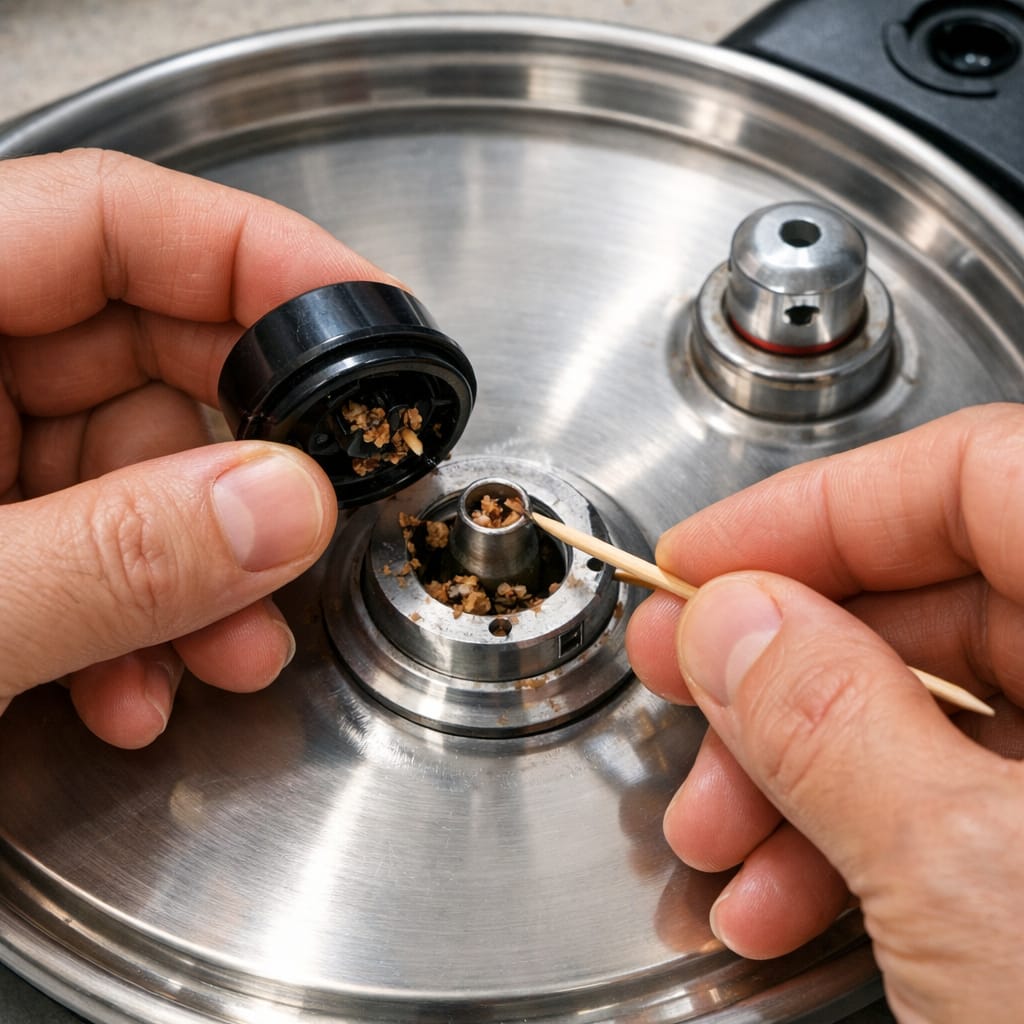
A blocked whistle is the most common issue. Remove the whistle, clean the vent pipe with a toothpick or thin pin, and wash it under warm water. Based on user reports, this simple method restores normal pressure and solves most whistle problems.
Steps to Clean the Whistle
- Turn off the stove and let cooker cool
- Remove the whistle carefully
- Insert a toothpick into the whistle hole
- Clean the vent pipe on the lid
- Wash and reinstall the whistle
Tip
Do this every 2–3 uses if you cook dal or rice frequently.
How to Fix Steam Leakage Around the Cooker Lid?
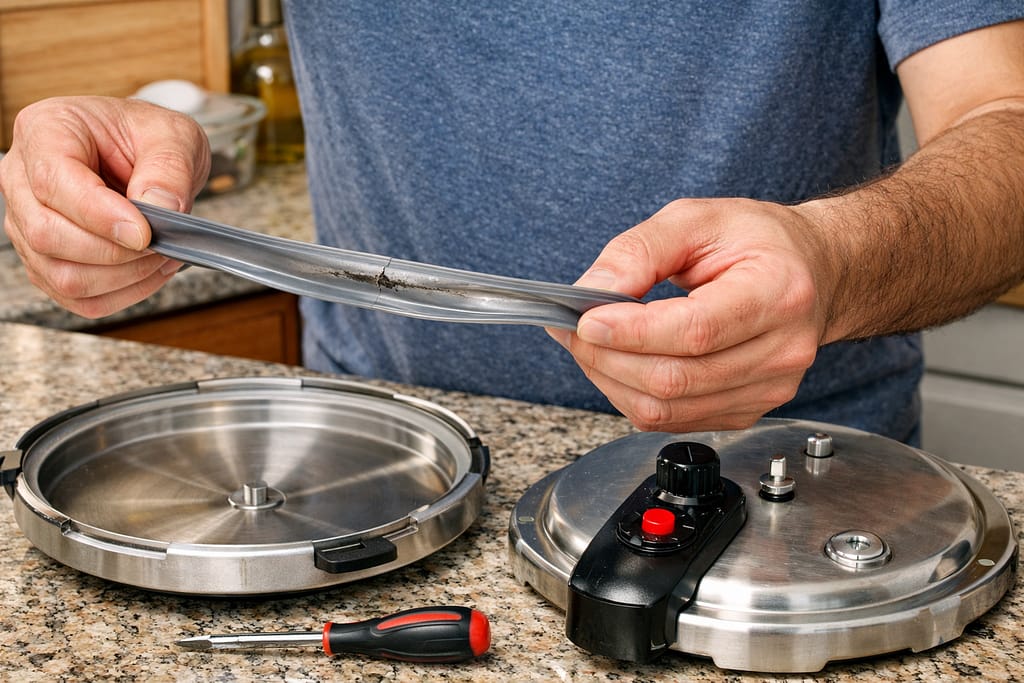
Steam leakage prevents the cooker from building pressure, causing the whistle to fail. According to support guidelines, the most commonly used method is replacing the rubber gasket and checking if the lid fits tightly. Cleaning the rim also prevents uneven sealing.
How to Fix It
- Remove and clean the rubber gasket
- Check for cracks or dryness
- Apply a little cooking oil to soften it
- Replace gasket if worn out
- Clean the lid rim thoroughly
Real-Life Example
Many users report that simply replacing the gasket resolves whistle problems instantly.
Could Low Flame or Low Water Be the Reason?
Yes. The cooker needs enough heat and water to build steam. If the flame is too low or water levels are inadequate, the cooker cannot generate pressure. Increasing the flame slightly and adding ½–1 cup water usually fixes the issue.
What You Should Check
- Is the flame medium-high?
- Did you add enough water?
- Is the food too thick (dal, potato, rajma)?
- Is the base of the cooker overheating?
Tip
Use medium flame for the first whistle, then reduce to low.
How to Fix a Stuck or Jammed Whistle?
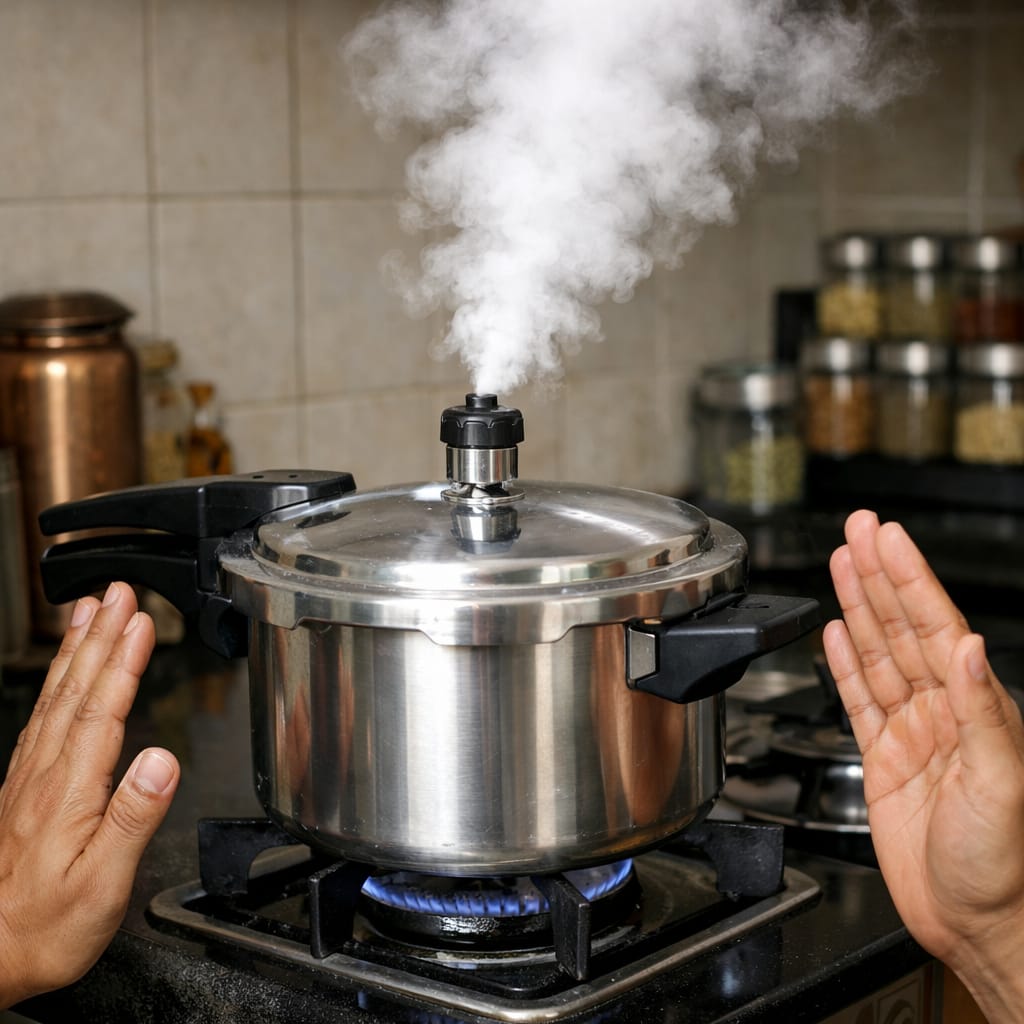
A jammed whistle often happens due to dried food residue inside the nozzle. According to user reports, soaking the whistle in hot water for 10 minutes and tapping it gently frees the stuck parts and restores normal pressure release.
Fixing Steps
- Remove whistle after cooker cools
- Soak in hot water
- Tap lightly to loosen blockage
- Clean inside using a toothpick
- Reattach and test again
Warning
Never try to force open a whistle while cooker is hot.
Conclusion
A pressure cooker whistle problem is usually simple to fix at home. By checking the whistle vent, gasket, water level, lid seal, and heat setting, you can solve most issues quickly. Regular cleaning and gasket replacement keep your cooker safe and efficient for years.
Disclaimer: This article shares general troubleshooting information, not official support guidance.