When you start setting up your home toolkit, the biggest confusion is which household tools are actually worth buying and which ones you can skip. Many beginners overspend on tools they never use or buy weak tools that break quickly.
This household tools comparison guide helps you choose the right tools by comparing features, durability, use cases, and real-life performance—based on user reports and practical home repair scenarios.
Which Household Tools Are Essential for Beginners?
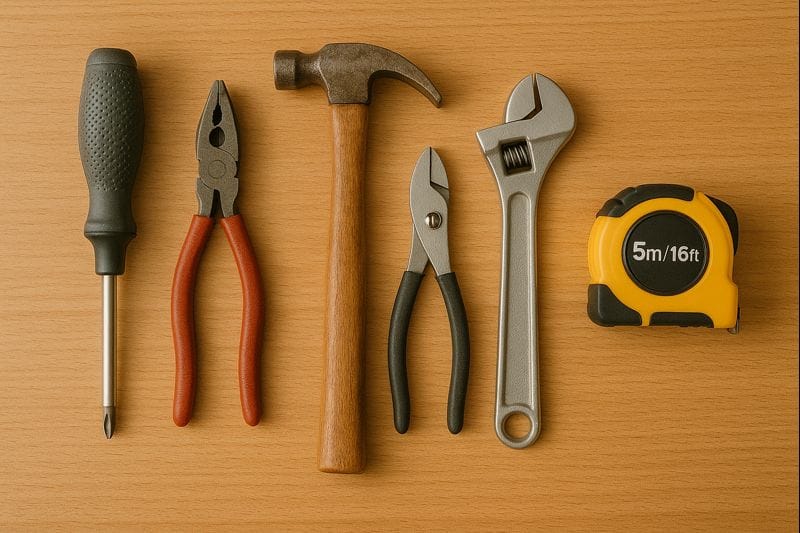
Essential household tools include screwdrivers, hammers, pliers, wrenches, measuring tools, and utility cutters. These handle almost 80% of common home fixes. Based on user reports, starting with a compact, high-quality toolkit saves money and prevents frequent replacements. You don’t need expensive electric tools unless you plan regular DIY repairs.
Essential Tools List
- Multi-bit screwdriver set
- Hammer with comfortable grip
- Adjustable wrench
- Combination + needle-nose pliers
- Measuring tape (3–5m)
- Cutter/utility knife
- Spirit level
- Tester for electrical checks
Real-Life Usage Example
A multi-bit screwdriver alone can fix loose hinges, wall switch plates, fan covers, and handle assemblies—making it one of the most cost-efficient tools for new homeowners.
Manual vs Electric Tools – Which Should You Choose?
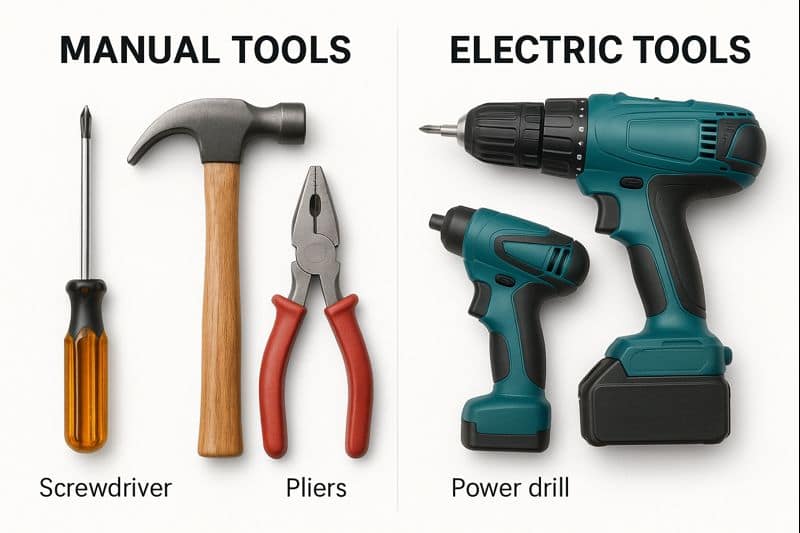
Manual tools work best for simple daily repairs, while electric tools offer speed and precision for bigger tasks. According to support guidelines and user reports, beginners should start with manual tools and upgrade to electric ones only if they frequently drill, cut, or assemble furniture.
Comparison Table
| Category | Manual Tools | Electric Tools |
| Best for | Small repairs, daily use | Heavy-duty DIY, drilling, cutting |
| Cost | Low | Medium to high |
| Skill Level | Beginner-friendly | Requires basic training |
| Maintenance | Minimal | Needs cleaning & storage |
| Examples | Screwdrivers, pliers, hammer | Drill, electric screwdriver |
When Electric Tools Are Worth Buying
- You drill often for shelves or décor
- You assemble large furniture regularly
- You want faster results with less manual effort
- You’re creating a DIY workspace at home
Which Brand or Build Material Should You Look For?
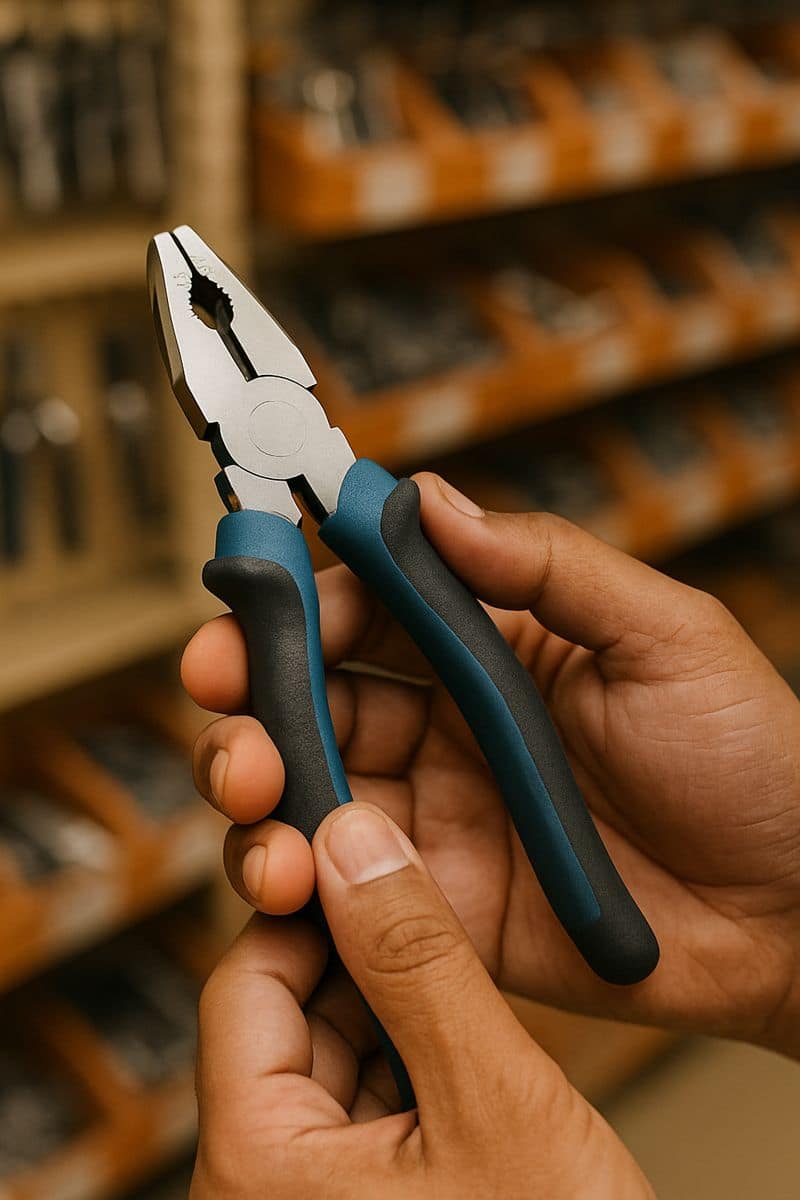
Choose tools with strong metal construction (chrome-vanadium steel), non-slip rubber grips, and replaceable parts. Based on user reports, mid-range brands offer longer durability than cheap local tools. A reliable tool should feel solid in hand and not bend or loosen during use.
Build Quality Comparison
| Tool Type | Budget-Level | Mid-Range | Premium |
| Screwdriver | May slip or bend | Good grip + magnetic tips | High precision + long life |
| Pliers | Weak joints | Smooth movement | Industrial-grade strength |
| Hammer | Loose head risk | Balanced weight | Anti-vibration handle |
Real-Life Usage
Budget screwdrivers often strip screws. Mid-range tools last 3–5 years even with regular use.
Should You Buy a Pre-Made Toolkit or Individual Tools?
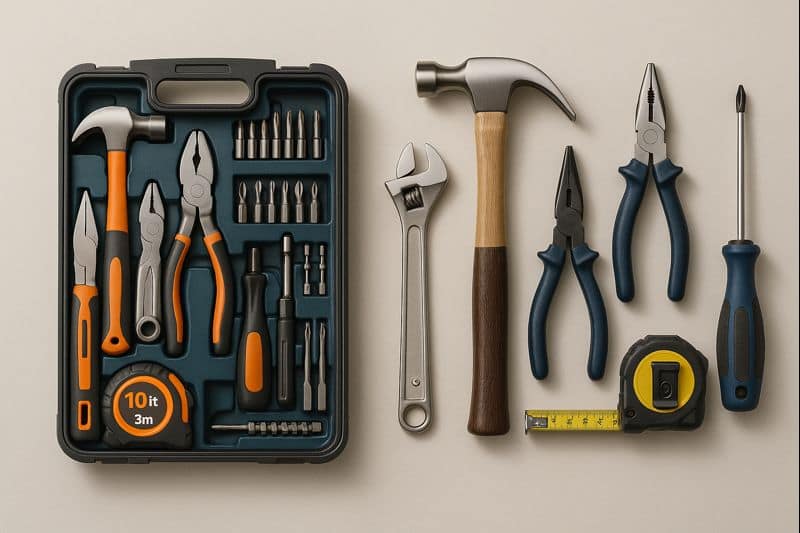
A pre-made toolkit is usually cheaper and beginner-friendly, but buying individual tools ensures better quality. According to user reports, students and renters prefer pre-made kits, while homeowners often buy individual premium tools for long-term use.
Comparison Table
| Feature | Pre-Made Toolkit | Individual Tools |
| Cost | Affordable | Higher |
| Quality | Mixed | Customizable, better quality |
| Convenience | Everything in one box | Choose only what you need |
| Best For | Beginners | Long-term users |
Recommended Approach
Try this method:
- Start with a pre-made toolkit.
- Replace frequently used tools (screwdriver, pliers, cutter) with better-quality ones over time.
How to Evaluate a Tool Before Buying?
Check the grip comfort, metal strength, weight balance, and user reviews before buying any tool. Commonly used methods include testing the tool’s movement (for pliers), checking bit magnetism (for screwdrivers), and verifying joint stability.
Beginner Tool Evaluation Checklist
- Does the screwdriver have magnetic tips?
- Does the wrench open smoothly?
- Is the plier joint stiff or loose?
- Does the hammer feel balanced?
- Is the metal coated to prevent rust?
Conclusion:
Choosing the right household tools saves money, prevents small issues from turning into bigger problems, and helps you become more confident with home maintenance. This household tools comparison guide gives you a clear understanding of what to buy, what to avoid, and how to choose tools that truly offer value.
Begin with essentials, upgrade gradually, and build a toolkit that works for your home and your lifestyle.
Disclaimer: This article shares general troubleshooting information, not official support guidance.
Frequently Asked Questions
Q. What household tools should I buy first?
A. Start with a screwdriver set, hammer, pliers, adjustable wrench, tape measure, and cutter. These tools cover most common home fixes such as tightening screws, assembling furniture, and handling small plumbing issues.
Q. Are electric tools necessary for beginners?
A. Not always. Manual tools can handle about 90% of basic home tasks. Electric tools like drills are useful only if you frequently hang shelves or décor.
Q. Which tool brands are reliable for home use?
A. User reports suggest that mid-range tools made with chrome-vanadium steel provide good durability. It’s better to focus on build quality rather than brand names.
Q. Is it better to buy a full toolkit or individual tools?
A. A full toolkit is convenient for beginners, while individual tools usually offer better quality for long-term use. A good approach is to start with a kit and upgrade specific tools over time.