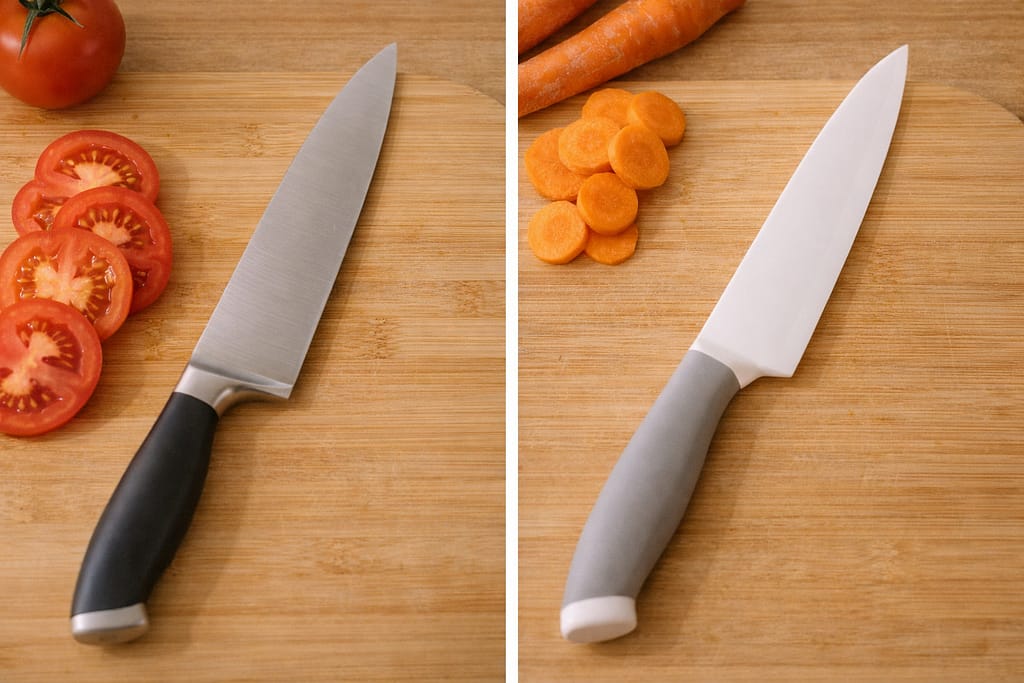
If you’re buying a new kitchen knife, you’ll quickly notice the two most popular options: steel knives and ceramic knives. Both promise sharpness, durability, and easy cutting, but they behave very differently in daily kitchen use.
This guide explains steel knife vs ceramic knife in simple terms—durability, sharpness, maintenance, daily usability, and which lasts longer based on real user reports.
What Is the Main Difference Between Steel and Ceramic Knives?
Steel knives are made from metal alloys and offer flexibility, toughness, and easy sharpening. Ceramic knives are made from zirconium oxide and provide extreme sharpness but are more brittle. Based on user reports, steel knives are better for everyday Indian cooking, while ceramic knives work best for soft fruits and vegetables.
Key Differences
- Steel = Strong + flexible
- Ceramic = Very sharp + brittle
- Steel suits heavy use; ceramic suits delicate cutting
Which Knife Lasts Longer – Steel or Ceramic?
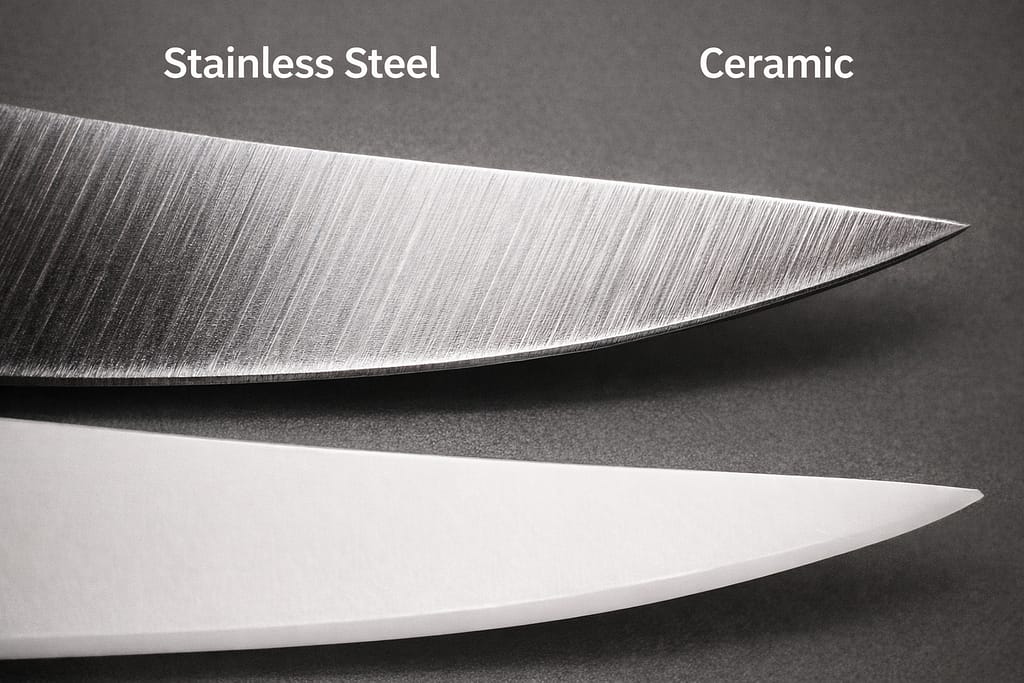
Steel knives generally last longer because they can withstand drops, rough use, and sharpening many times. Ceramic knives keep sharpness for months, but once damaged, cracks or chips cannot be repaired. According to support guidelines, long-term durability is higher in stainless-steel knives.
Why Steel Lasts Longer
- Can handle bones, hard veggies, tough skins
- Safe if dropped
- Blades can be sharpened repeatedly
- Corrosion-resistant stainless steel lasts 5–10 years
When Ceramic May Fail
- Breaking if dropped
- Chipping when cutting hard foods
- Blade tip snapping during twisting
Which Knife Is Better for Daily Indian Cooking?
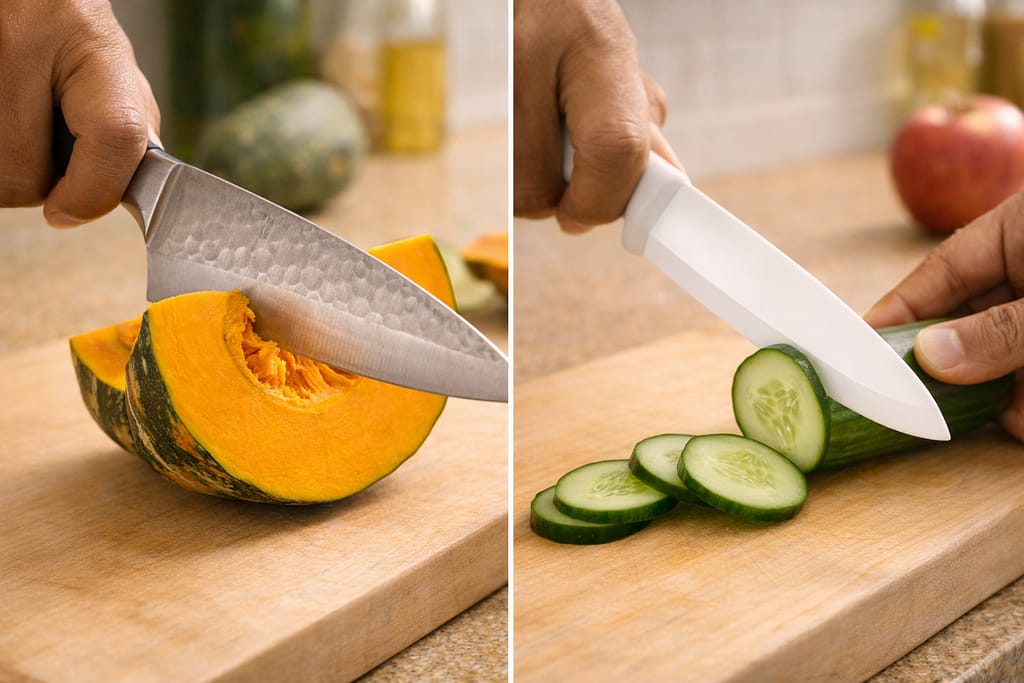
For everyday Indian kitchens—cutting onions, tomatoes, potatoes, ginger, garlic, and leafy vegetables—steel knives perform better. Ceramic knives work well for soft foods but struggle with hard or fibrous items. Based on user reports, steel knives offer better control, strength, and versatility for daily meals.
Steel Knife Works Best For
- Onion and tomato chopping
- Hard vegetables (carrot, beetroot)
- Ginger–garlic crushing
- Meat trimming
- Daily heavy usage
Ceramic Knife Works Best For
- Fruit slicing
- Soft vegetables
- Light salad prep
Which Knife Is Easier to Maintain?
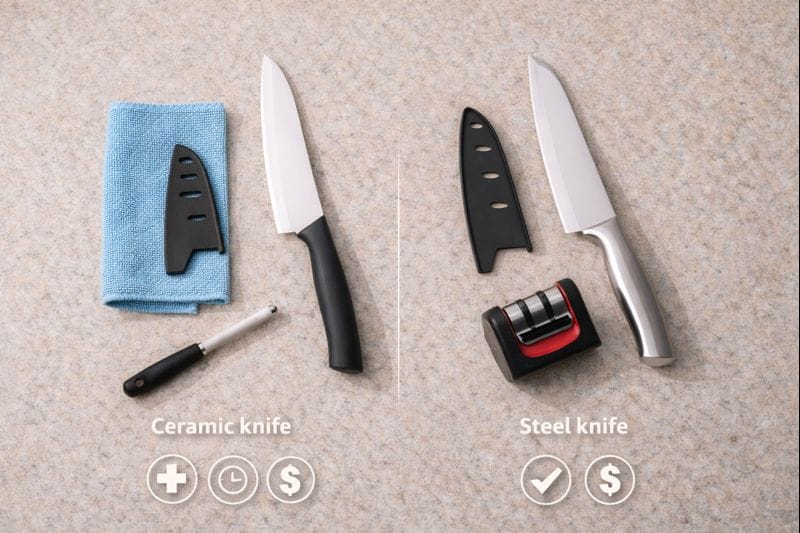
Steel knives need regular sharpening but are tougher and easier to maintain. Ceramic knives rarely need sharpening, but they require careful handling to avoid cracks. According to user reports, beginners prefer steel because it’s more forgiving during rough use or improper cutting techniques.
Steel Knife Maintenance
- Sharpen every 3–4 weeks
- Works with any sharpener
- Safe for all cutting boards
Ceramic Knife Maintenance
- Must use soft cutting boards
- Cannot be used for prying or twisting
- Breaks if dropped
Which Knife Should You Choose Based on Your Cooking Style?
Choose a steel knife if you cook Indian meals daily or handle hard vegetables. Choose a ceramic knife if you prepare salads, fruits, or soft items frequently. According to user reports, most home cooks prefer a steel knife as their primary tool and a ceramic knife only as a secondary option.
If You’re a Beginner
- Start with a 6–8 inch stainless steel chef knife
If You Want Extreme Sharpness
- Add a ceramic knife for fruits and salads
If You Have Kids Helping in Kitchen
- Steel knives are safer and more durable
Conclusion
When comparing steel knife vs ceramic knife, the winner for most households is stainless steel. It lasts longer, handles daily chopping, and can be sharpened repeatedly. Ceramic knives are excellent for soft slicing but require careful handling.
If you want only one knife in your kitchen—choose steel. If you want a specialty slicer—add ceramic as a secondary option.
Disclaimer: This article shares general troubleshooting information, not official support guidance.
Frequently Asked Questions
Q. Do ceramic knives stay sharp longer?
A. Yes. Ceramic knives stay sharp for a long time, but once they become dull or chip, sharpening is difficult and usually requires a specialist.
Q. Are steel knives safer than ceramic knives?
A. Yes. Steel knives are generally safer for beginners because they are less likely to crack or break and offer better control during use.
Q. Can ceramic knives cut hard vegetables?
A. No. It’s not recommended to use ceramic knives on hard vegetables like carrots, beetroots, or bones, as the blade may chip or break.
Q. Which knife should I buy first?
A. Start with a stainless steel chef’s knife. It’s durable, versatile, and suitable for most daily cooking tasks.