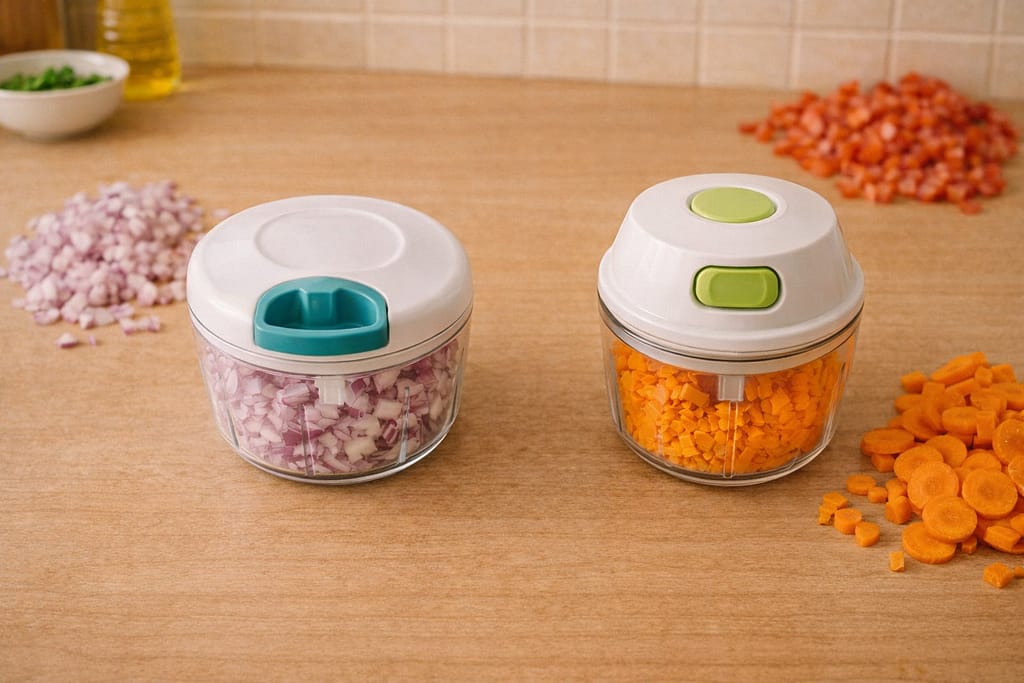
If you’re setting up your kitchen or trying to save chopping time, you’ve probably wondered whether a manual chopper or an electric chopper is the better choice. Both seem useful, but they work very differently, and the right choice depends on your cooking style, quantity, and convenience needs.
This guide breaks down the differences clearly so you can confidently choose the right tool for your home.
How Are Manual and Electric Choppers Different?
Manual choppers work without electricity and use a pull-cord or push mechanism to chop vegetables. Electric choppers use a motor for faster, finer chopping. Based on user reports, manual choppers are great for small quantities, while electric choppers suit frequent cooking or bulk prep. Both are easy to use but serve different needs.
Key Differences You Should Know
- Manual: Hand-powered, compact, easy to wash
- Electric: Motor-powered, smoother texture, needs socket
- Manual: Best for onions, garlic, tomatoes
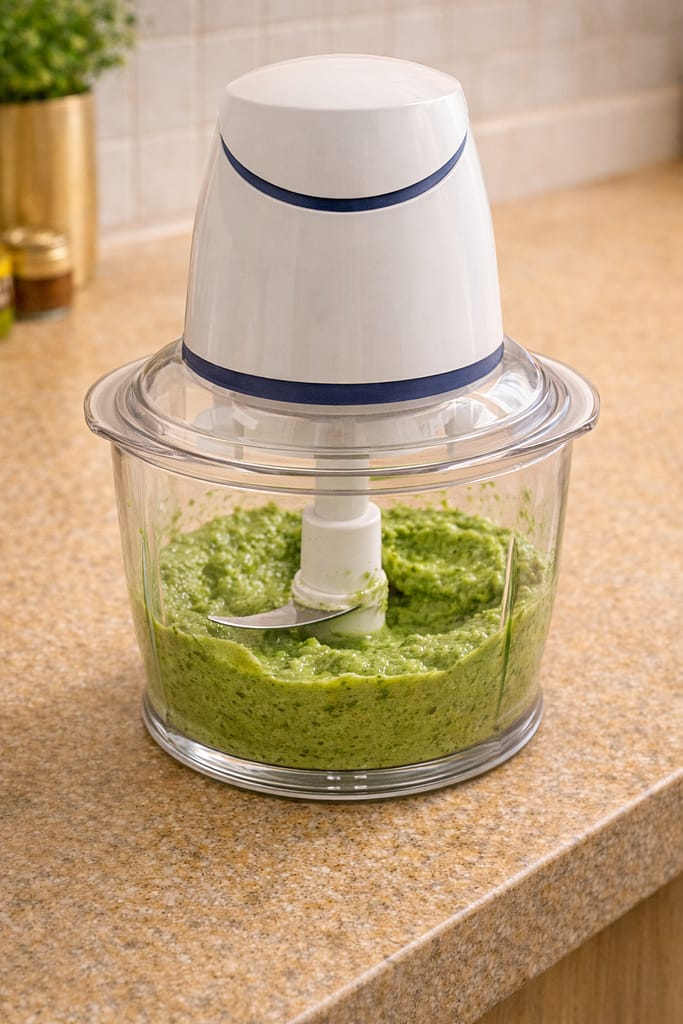
- Electric: Best for chutneys, pastes, nuts, herbs
Which Chopper Is Better for Daily Indian Cooking?
For most Indian homes, a manual chopper works best for everyday tasks like chopping onions, tomatoes, garlic, ginger, coriander, or small curry bases. Electric choppers offer smoother blends but require more cleaning and space. According to support guidelines, manual choppers are more beginner-friendly and need less maintenance.
When Manual Chopper Wins
- Quick everyday chopping
- Small family of 1–3 people
- Limited kitchen space
- No need for fine paste
When Electric Chopper Wins
- You make chutneys often
- You batch-cook vegetables
- You prefer one-touch convenience
What Are the Pros & Cons of Manual vs Electric Choppers?
Manual choppers are affordable, compact, and easy to wash, while electric choppers provide smoother, faster results but require sockets and careful handling. Based on user reports, the pull-cord mechanism is reliable, but electric motors offer better consistency for chutneys and fine chopping.
Manual Chopper Pros
- No electricity needed
- Safe and beginner-friendly
- Easy to clean
- Budget-friendly
- Good for everyday Indian cooking
Manual Chopper Cons
- Not ideal for fine pastes
- Pull-cord may wear out over years
Electric Chopper Pros
- Very fast
- Smooth chopping and blending
- Can handle nuts and herbs better
Electric Chopper Cons
- More cleaning
- Needs electricity
- Can overheat if overloaded
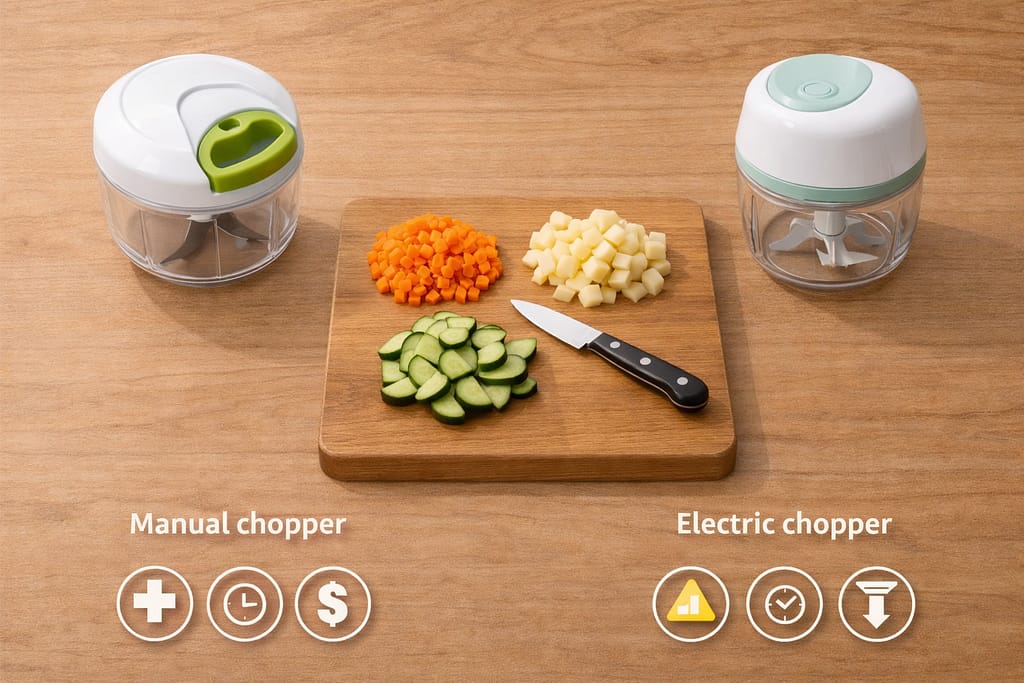
How to Choose the Right Chopper for Your Cooking Style?
Choose a manual chopper if your daily cooking needs involve basic vegetables and small quantities. Choose an electric chopper if you frequently make chutneys, mince meat, chop nuts, or prepare large batches. According to user reports, the choice depends more on usage frequency than on brand.
Choose Manual If You…
- Cook for 1–3 people
- Make onion–tomato bases
- Prefer quick cleanup
- Have a compact kitchen
Choose Electric If You…
- Want consistent fine texture
- Prepare chutneys weekly
- Cook in larger batches
- Prefer effortless chopping
Conclusion
Both manual and electric choppers are great tools—but they serve different kitchen needs. If you want simplicity, quick chopping, and easy cleaning, choose a manual chopper. If you prefer speed, smooth texture, and batch processing, go for an electric chopper.
Think about your kitchen size, cooking habits, and daily prep routine before choosing.
Disclaimer: This article shares general troubleshooting information, not official support guidance.
Frequently Asked Questions
Q. Which is better—manual or electric chopper?
A. Manual choppers are best for everyday vegetable chopping, while electric choppers are more suitable for making fine pastes and handling bulk preparation.
Q. Does a manual chopper require a lot of effort?
A. Not really. Most pull-cord manual choppers need only 3–6 pulls to achieve a medium chop.
Q. Can electric choppers replace mixers?
A. No. Electric choppers are good for chopping but cannot replace mixer grinders for heavy grinding tasks.
Q. Which chopper lasts longer?
A. Electric choppers generally last longer when used carefully. Manual choppers typically last 1–3 years, depending on the durability of the pull cord.