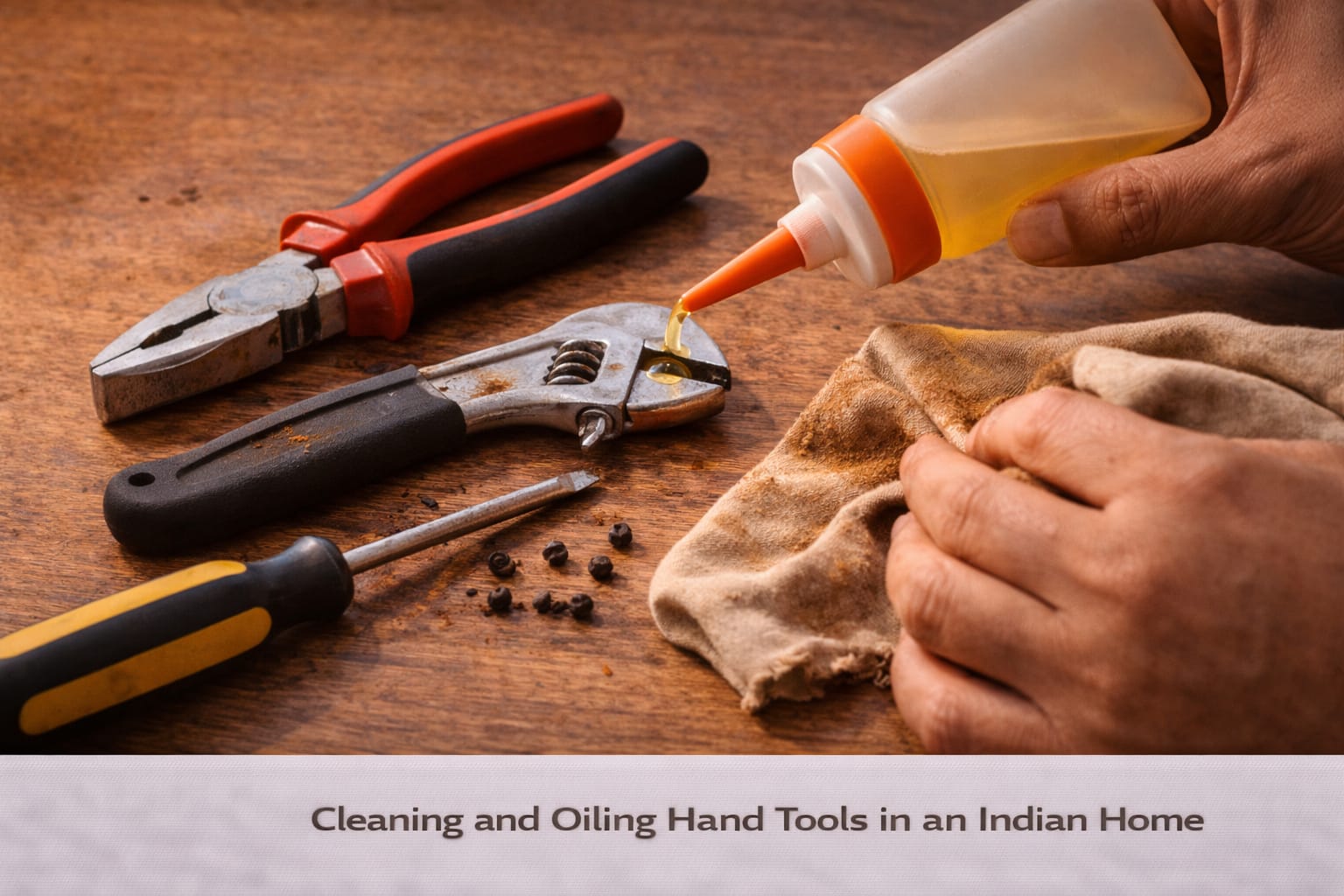
Monsoon humidity in India can damage tools faster than any other season. Moisture leads to rust, mold, and reduced tool performance, especially if you keep tools in balconies, kitchens, or utility corners. Learning how to maintain tools during monsoon helps you extend their life and avoid frequent replacements. These easy methods are based on user reports and commonly followed DIY practices.
How Do You Prevent Rust on Metal Tools During Monsoon?
You can prevent rust by cleaning tools regularly and applying a thin protective layer like oil or rust-preventive spray. According to support guidelines, keeping tools completely dry is the first and most important step in humidity control.
Anti-Rust Methods
- Wipe tools with a dry cloth after every use
- Apply machine oil, WD-40, or coconut oil as a protective layer
- Store metal items inside zip pouches for reduced moisture exposure
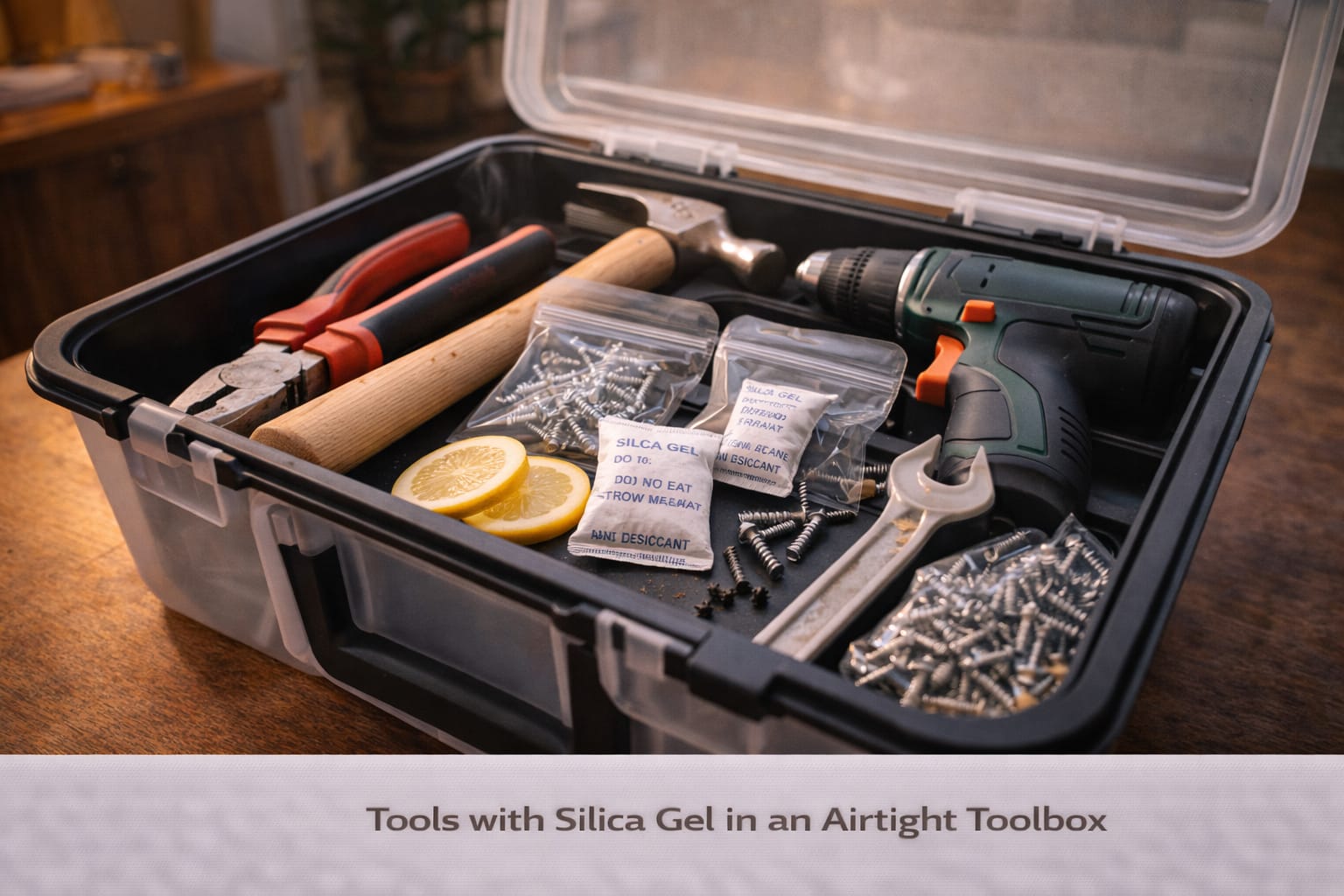
- Add silica gel packets inside toolboxes
- Check weekly for early signs of corrosion
How Should You Store Tools During the Rainy Season?
Proper storage prevents direct exposure to humid air. Keeping tools in airtight containers or moisture-resistant toolboxes works well. Many Indian homeowners report fewer rust problems when they avoid open shelves during monsoon.
Monsoon Storage Tips
- Use plastic toolboxes instead of metal ones
- Add charcoal blocks or moisture absorbers inside storage spaces
- Keep toolkits in dry indoor areas, away from windows
- For power tools, wrap cables neatly and store in original cases
- Avoid leaving tools in utility balconies during rain
Prompt:
“A highly realistic photo of a person inspecting a power drill or angle grinder for moisture, wiping cables, and brushing dust from air vents. Indian home setting, dry indoor area, safety-focused environment, soft natural light, realistic tool textures.”
How Can You Maintain Power Tools Safely in Humid Weather?
Power tools need extra care during monsoon because humidity affects motors and wiring. Always keep them dry, clean air vents, and check cables before use. Based on user reports, regular maintenance prevents short circuits and performance issues.
Care Tips for Power Tools
- Clean dust from air vents using a soft brush
- Wipe body and cables after use
- Store with silica gel inside cases
- Never use power tools on wet floors
- Check plugs and wires for moisture before switching on
How Should You Clean and Oil Tools for Monsoon Protection?
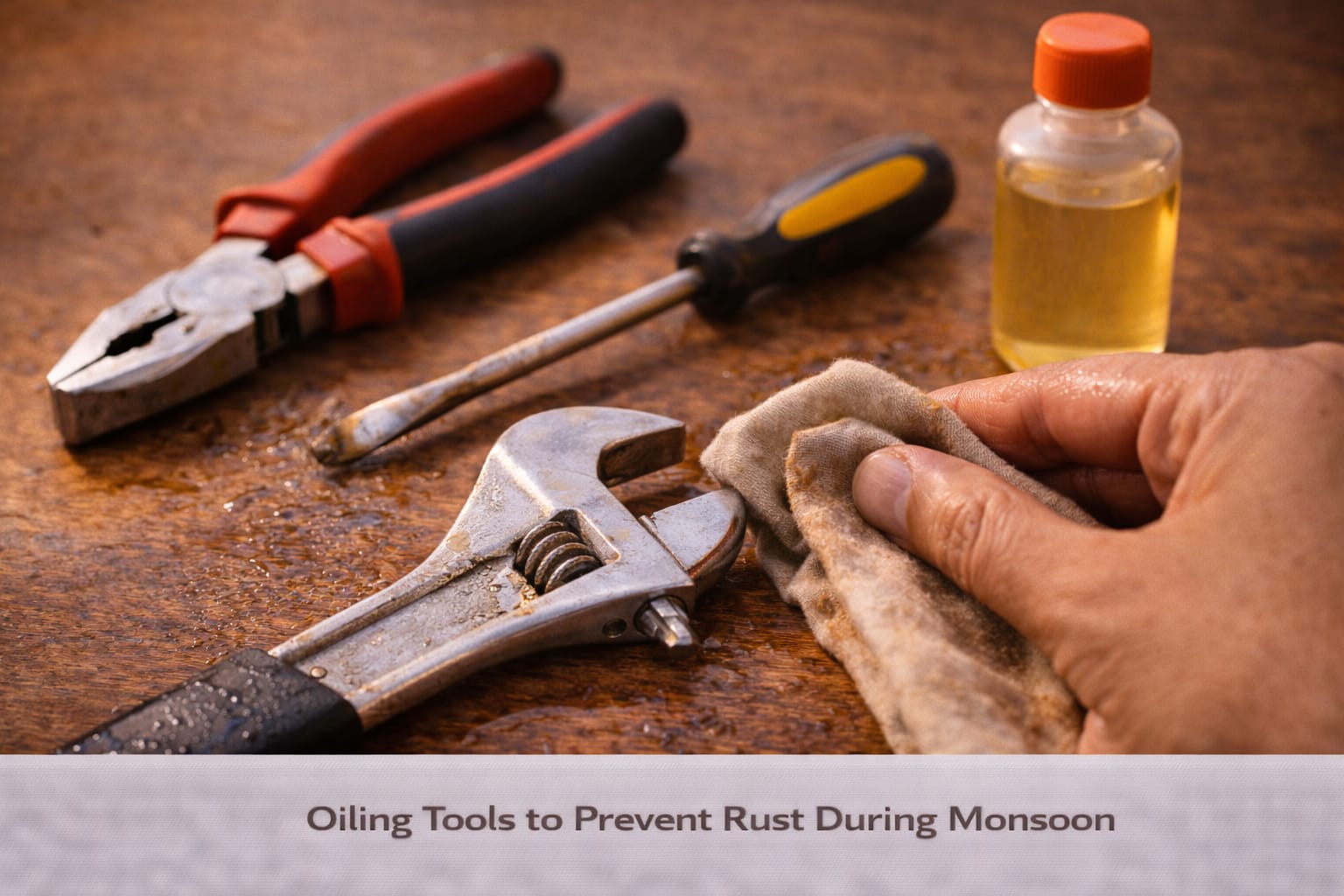
Routine cleaning and light oiling act as a protective shield against moisture. Even household oils work well when applied correctly. Many housewives and DIY hobbyists use this method before monsoon begins.
Step-by-Step Cleaning Method
- Wash tools if needed and dry completely
- Lightly oil hinges, joints, and blades
- Use a cloth to remove excess oil
- Sharpen cutters or pliers if they feel stiff
- Recheck after a week to ensure smooth movement
Conclusion
Knowing how to maintain tools during monsoon helps you save money, avoid rust-related damage, and keep your tools working smoothly all year. With simple steps—like oiling, airtight storage, and regular cleaning—you can protect both hand tools and power tools from India’s heavy humidity. Start preparing before monsoon arrives to keep everything safe and functional.
Disclaimer: This article shares general troubleshooting information, not official support guidance.
Frequently Asked Questions
Q. Why do tools rust faster during the monsoon?
A. High humidity increases moisture in the air, which speeds up oxidation on metal surfaces and causes tools to rust faster.
Q. Can coconut oil really prevent rust?
A. Yes. A light coat of coconut oil creates a temporary moisture barrier that helps slow down rust formation.
Q. Where should I store power tools during the monsoon?
A. Power tools should be stored indoors in airtight boxes. Adding silica gel packets helps reduce moisture exposure.
Q. What if my tools already have rust?
A. You can scrub the rust using steel wool, apply a rust remover if needed, and then re-oil the tool to protect it.
Q. Are silica gel packets useful?
A. Yes. Silica gel packets absorb excess moisture and are commonly used in toolboxes during the monsoon.