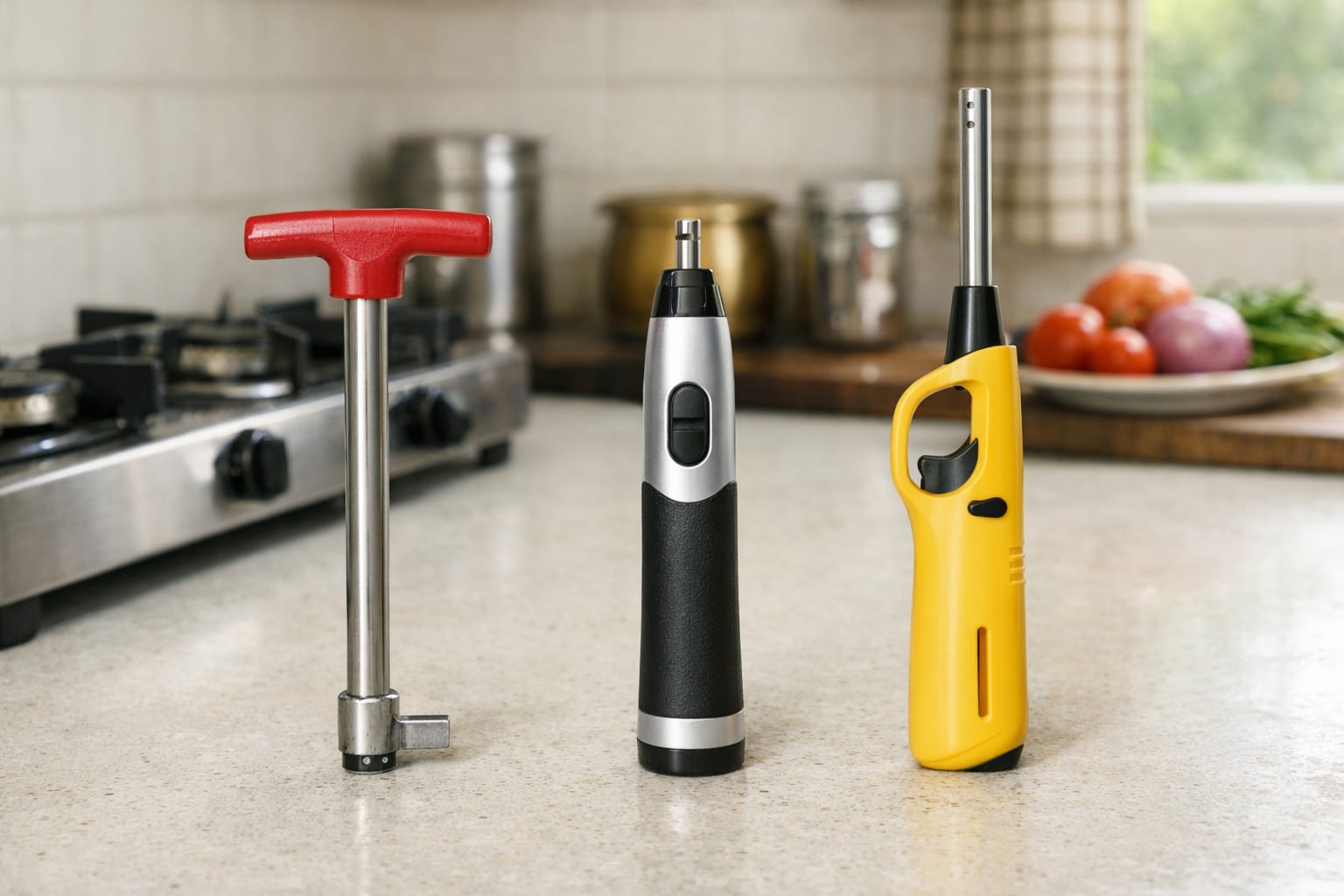
A gas stove lighter looks like a small tool, but choosing the wrong one can cause daily frustration—weak sparks, broken tips, or unsafe usage. Many first-time buyers don’t know there are different types of lighters designed for different kitchens.
This complete guide explains how to choose a gas stove lighter that is safe, durable, and easy to use, based on user reports and commonly used kitchen practices.
What Types of Gas Stove Lighters Are Available?
Gas stove lighters mainly come in three types: manual spark lighters, electric battery-operated lighters, and piezo push-button lighters. Based on user reports, manual spark lighters are the most common and reliable for daily home use, while electric lighters offer extra convenience but need battery care.
Common Gas Lighter Types
- Manual spark lighter: Press-and-click, no battery
- Electric lighter: Button-operated, battery-powered
- Long-nozzle lighter: Safer distance from flame
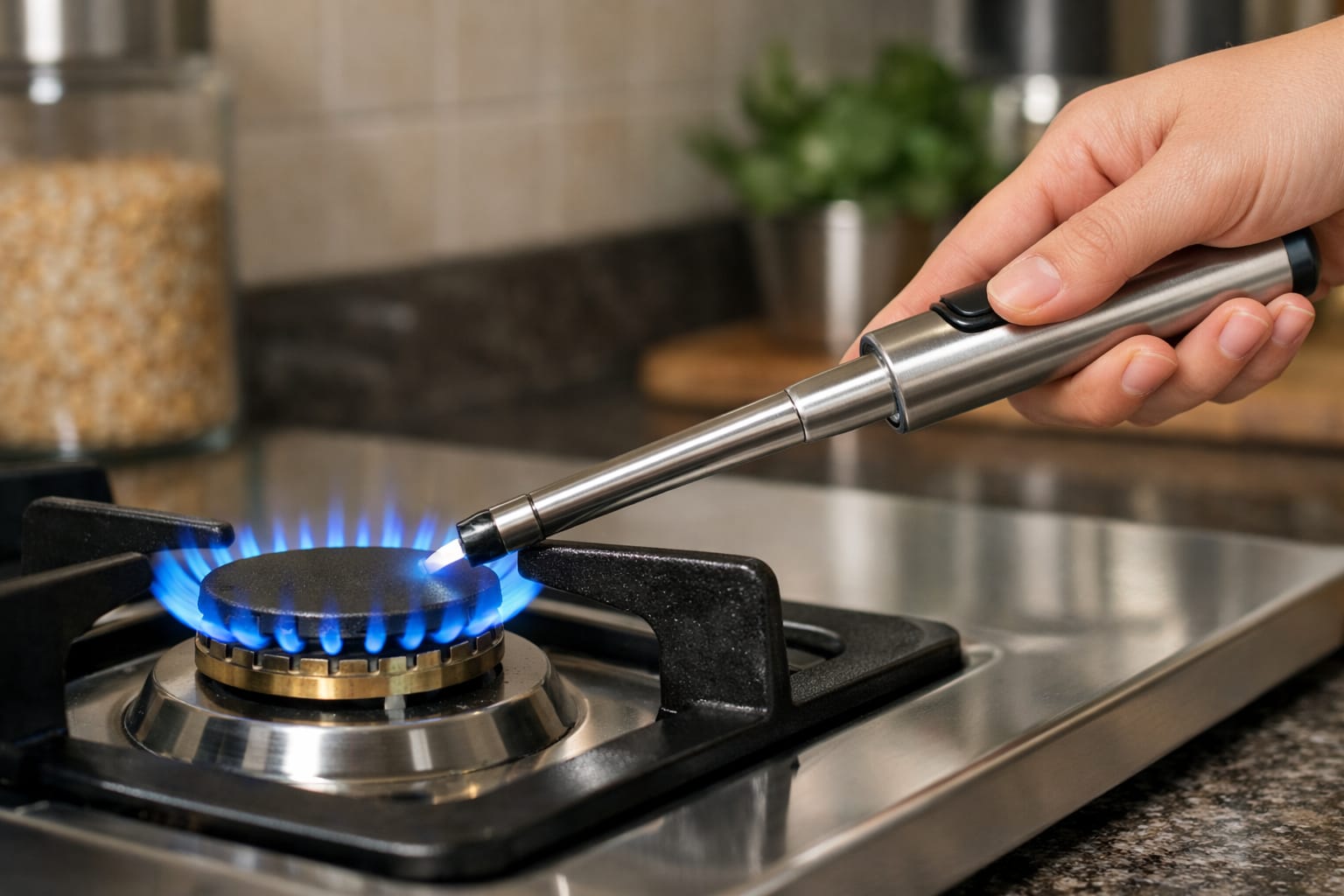
Which Gas Stove Lighter Is Safest for Home Use?
A long-nozzle gas stove lighter with a strong spark mechanism is the safest option for home kitchens. According to support guidelines, keeping your hand at a distance from the burner reduces burn risk. Lighters with insulated handles and a firm grip are commonly recommended for beginners.
Safety Features to Look For
- Long metal or insulated nozzle
- Non-slip handle grip
- Strong single-click spark
- Heat-resistant body
Real-Life Tip
If you cook daily, avoid short-tip lighters—they bring your hand too close to the flame.

Should You Choose a Manual or Electric Gas Stove Lighter?
Manual lighters are more durable and low-maintenance, while electric lighters offer convenience but depend on battery condition. Based on user reports, most Indian households prefer manual lighters because they work even during power cuts and don’t fail due to battery leakage.
Manual Lighter – Best If You Want
- No battery worries
- Long lifespan
- Simple repair or replacement
Electric Lighter – Best If You Want
- Effortless button press
- Cleaner spark action
- Modern design

What Build Quality and Material Should You Check?
Always choose a gas stove lighter made from stainless steel or high-quality metal with a sturdy plastic or rubber grip. According to support guidelines, weak metal tips bend easily and reduce spark accuracy. A solid build ensures consistent ignition and longer usage.
Build Quality Checklist
- Thick metal nozzle (not hollow or flimsy)
- Tight spark button (not loose)
- Comfortable grip for daily use
- Balanced weight—not too heavy
How Do You Choose the Right Lighter for Your Cooking Style?
Your cooking frequency and stove type should guide your choice. For daily cooking, a durable manual lighter is ideal. If you cook occasionally or prefer convenience, an electric lighter works well. Based on user reports, heavy users benefit from simple designs over fancy features.
Choose Based on Your Usage
- Daily cooking: Manual spark lighter
- Elderly users: Electric lighter with soft button
- Multiple burners: Long-nozzle lighter
Small kitchens: Compact but insulated, lighter
Conclusion
Choosing the right gas stove lighter is about safety, durability, and ease of use—not price or design alone. A long-nozzle manual lighter works best for most homes, while electric lighters suit those who want extra convenience.
Follow these steps, check build quality, and match the lighter to your cooking habits for a hassle-free kitchen experience.
Disclaimer
This article shares general troubleshooting information, not official support guidance.
FAQs
Q. How long does a gas stove lighter usually last?
A. Based on user reports, a good manual lighter lasts 1–2 years with daily use.
Q. Why does my gas lighter spark but not light the stove?
A. This usually happens due to weak spark contact or a bent nozzle. Cleaning or replacing the lighter helps.
Q. Are electric gas lighters safe?
A. Yes, according to support guidelines, electric lighters are safe when batteries are replaced regularly and kept dry.
Q. Is a long gas lighter better than a short one?
A. Yes. A longer nozzle keeps your hand away from the flame and improves safety.