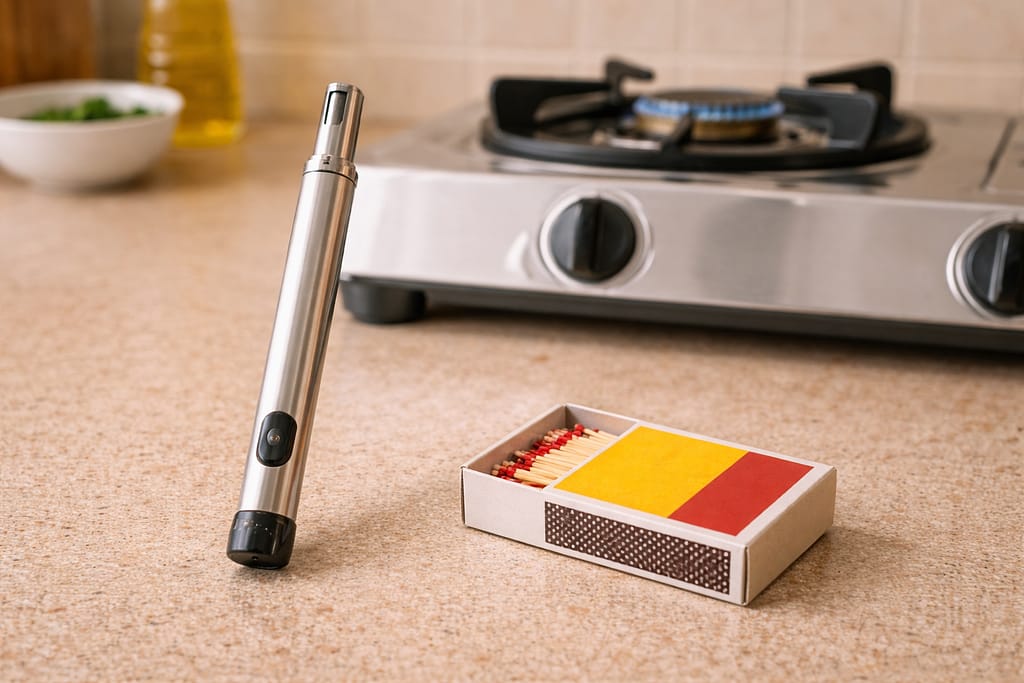
Many new homeowners and renters wonder whether a gas stove lighter or matchstick is safer, easier, and more cost-effective for daily cooking. Both tools work, but each has different safety levels, convenience, and long-term reliability.
This guide explains the differences clearly so you can choose the best option for your kitchen.
Which Is Safer – Gas Stove Lighter or Matchstick?
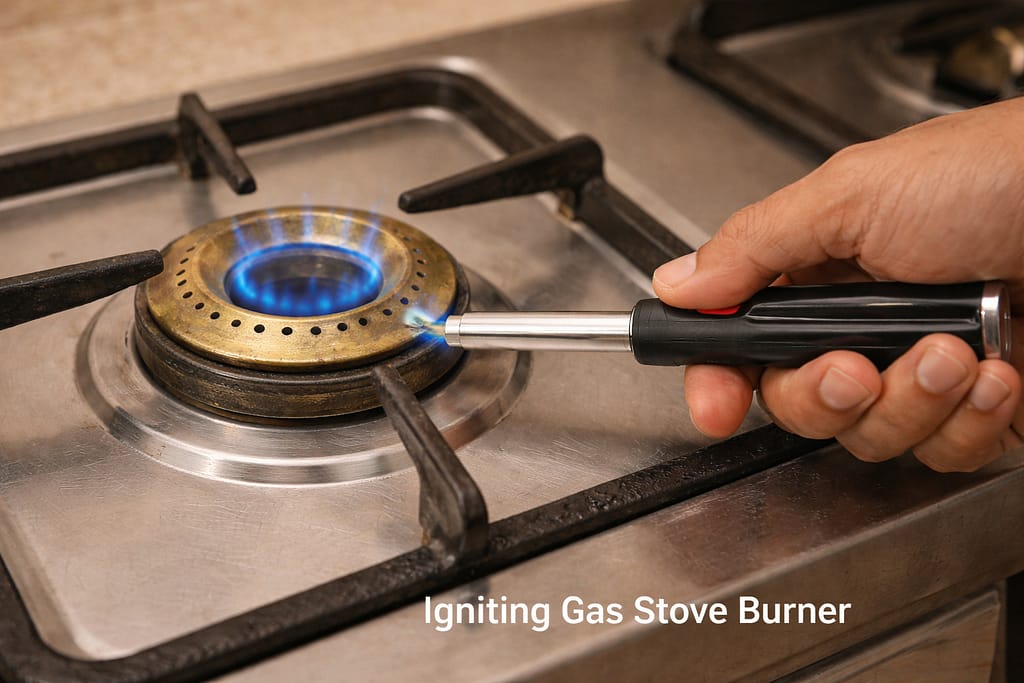
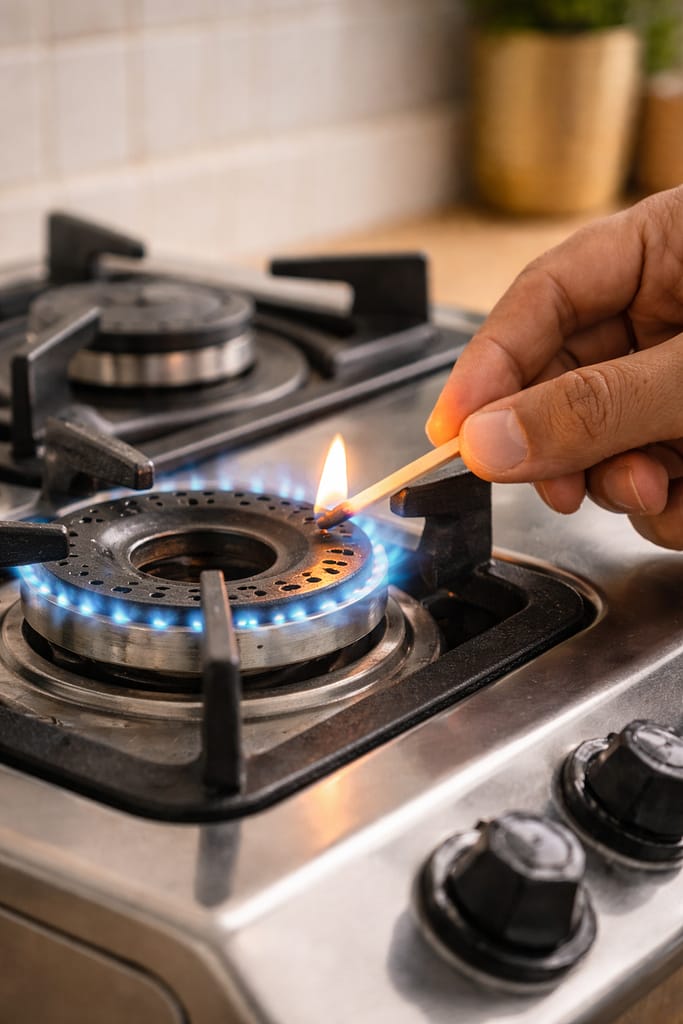
A gas stove lighter is safer than matchsticks because it keeps your hand farther from the flame, ignites instantly, and works even in humid conditions. Based on user reports and commonly used methods, matchsticks break easily, burn too fast, and can be risky for beginners or children learning gas stove lighting.
Safety Breakdown
- Lighter keeps distance from flame
- Matchstick can burn fingers
- Lighter works better during monsoon moisture
- Electric lighters add spark protection
Which Is More Convenient for Daily Cooking?
A gas lighter is more convenient for everyday use because it doesn’t require replacing like matchsticks and works with a single press. According to support guidelines, matchsticks require dry storage and frequent handling, making them slightly slower and less reliable during busy cooking hours.
Convenience Comparison
- Lighter = quick, reusable, simple
- Matchstick = slow, single-use, unreliable in humidity
- Electric lighter = fastest and spark-controlled
Which Option Is Cheaper in the Long Run?
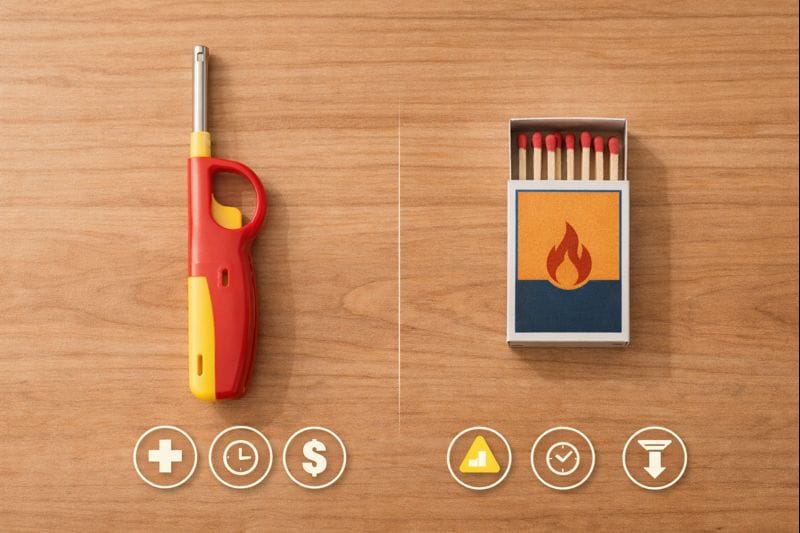
Matchsticks are cheaper upfront, but lighters are more cost-effective over months of use. Based on user reports, a good manual lighter lasts 1–2 years, while a household may use multiple matchboxes weekly. Long-term, lighters reduce repeated purchases and waste.
Cost Insight
- Matchsticks = ₹10–₹20 per box, but recurring
- Lighters = one-time cost (₹80–₹300)
- Electric lighters = need battery replacement occasionally
Which Is Better for Beginners Learning to Use a Gas Stove?
Beginners should start with a gas stove lighter because it’s easier to operate, safer for the hands, and avoids sudden flame exposure. According to user reports, many first-time users feel more confident with the push-and-spark mechanism compared to striking matchsticks repeatedly.
Beginner Tips
- Always ignite lighter before turning the knob
- Keep lighter dry and clean
- Avoid leaning too close to burners
- Use matchsticks only if your lighter stops working temporarily
Conclusion
For most households, especially beginners or small families, a gas stove lighter is the better choice. It is safer, more convenient, works in all weather conditions, and saves money in the long run.
Matchsticks still work when needed, but relying on them daily is less practical. Choose a good-quality lighter and keep a spare to avoid inconvenience.
Disclaimer: This article shares general troubleshooting information, not official support guidance.
Frequently Asked Questions
Q. Is a gas stove lighter better than matchsticks?
A. Yes. Gas stove lighters are safer, faster, and more cost-effective for daily cooking, especially for beginners.
Q. Do matchsticks damage gas burners?
A. No. However, dropping burning matchsticks into the burner can cause clogging, so they should always be disposed of safely.
Q. Are electric lighters safe to use?
A. Yes. Electric lighters are safe when used properly. Regularly check the batteries and keep the lighter dry.
Q. Why does my lighter stop sparking?
A. The most common causes are moisture or carbon buildup. Wiping the tip clean and drying it usually restores the spark.