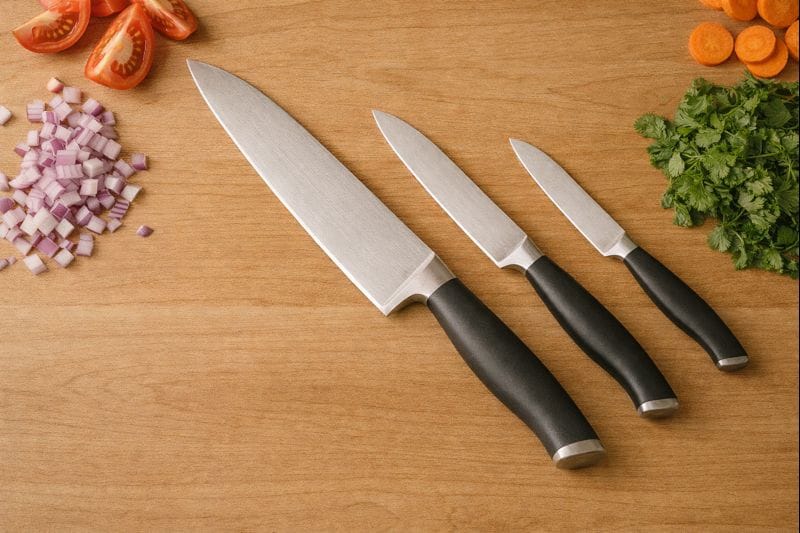
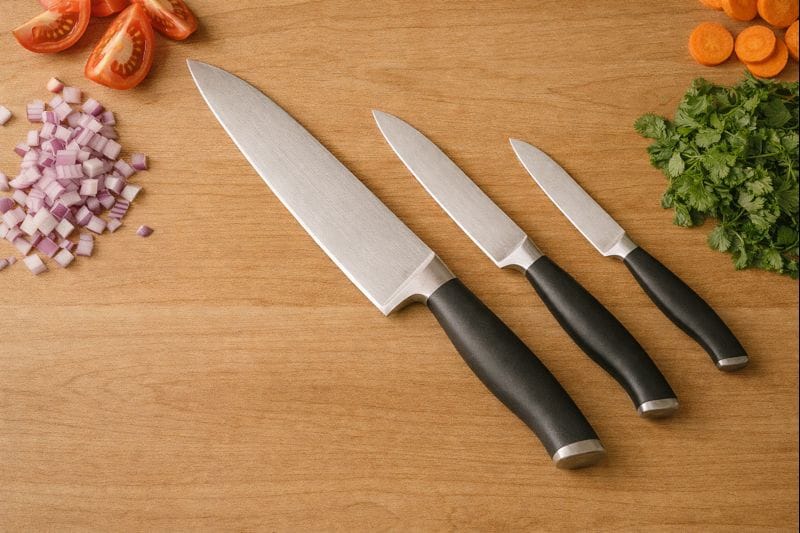
Choosing your first kitchen knife can feel confusing—too many shapes, sizes, and price ranges. For beginners, the goal is simple: find a knife that is safe, sharp enough, easy to handle, and doesn’t cost too much.
This guide explains the best kitchen knife for beginners, focusing on budget options, real-life usage, and what you should check before buying.
What Type of Kitchen Knife Is Best for Beginners?
Beginners should start with a chef’s knife or multipurpose utility knife because they handle most cutting tasks—vegetables, fruits, herbs, and basic meat prep. Based on user reports, a 6–8 inch knife with a comfortable grip and stainless-steel blade offers the easiest learning curve without requiring professional skills or maintenance.
Why This Knife Works Best
- Easy to control
- Works for 80% of daily kitchen tasks
- Safe and stable for beginners
- Affordable and widely available
What Features Should You Look for in a Beginner-Friendly Knife?
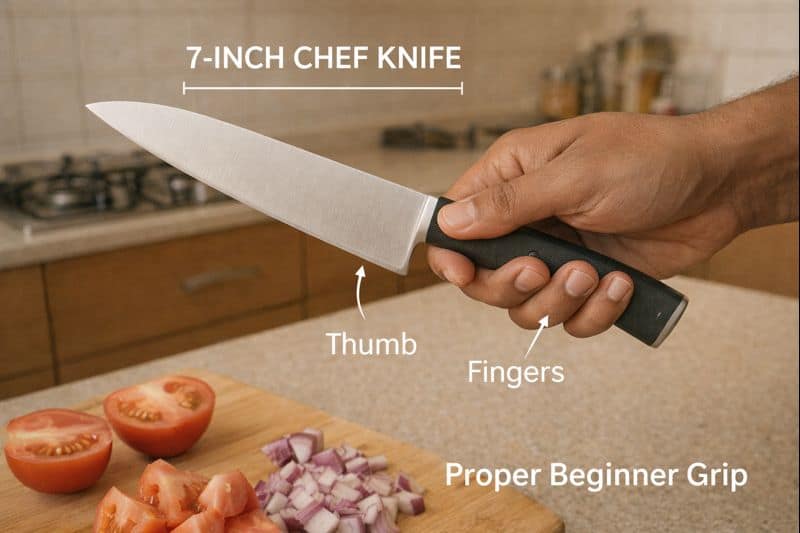
Look for a knife with stainless steel, a comfortable handle, and a balanced weight that feels stable in your hand. According to support guidelines and user reports, beginners should avoid overly large or extremely sharp specialty knives until they gain confidence and proper cutting technique.
Key Features to Prioritize
- Blade material: Stainless steel for durability
- Length: 6–8 inches for better control
- Handle: Anti-slip grip (rubber or ergonomic plastic)
- Maintenance: Easy to clean and sharpen
- Safety: Slight curve at the tip prevents accidents
What Are the Best Budget Kitchen Knife Options for Beginners?
Budget knives with stainless steel blades and ergonomic handles are ideal for beginners. They offer reliable cutting performance at a low cost. Based on user reports, knives in the ₹200–₹600 range provide great value without compromising usability for everyday home cooking.
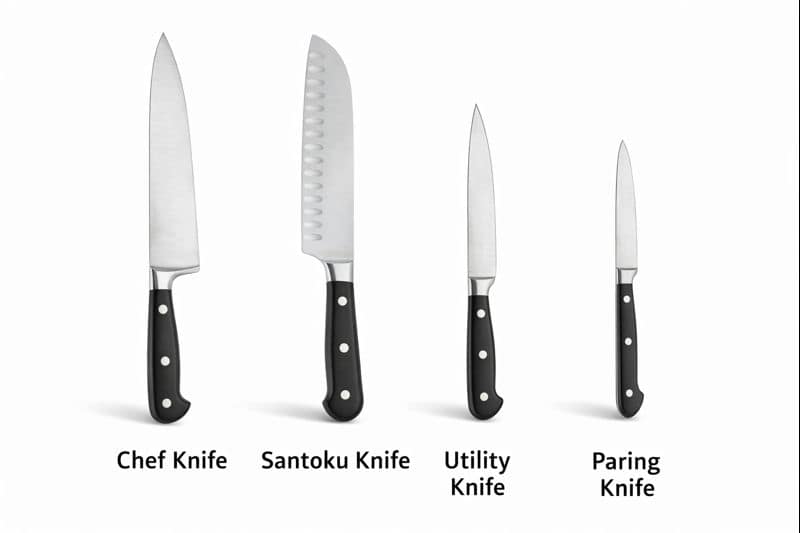
Popular Budget-Friendly Knife Styles
- Chef Knife (6–8 inch): Best all-rounder
- Utility Knife (4–6 inch): Smaller and great for fruits/veggies
- Santoku Knife: Good for chopping and dicing
- Paring Knife: Best for peeling and fine cutting
Real-Life Usage Example
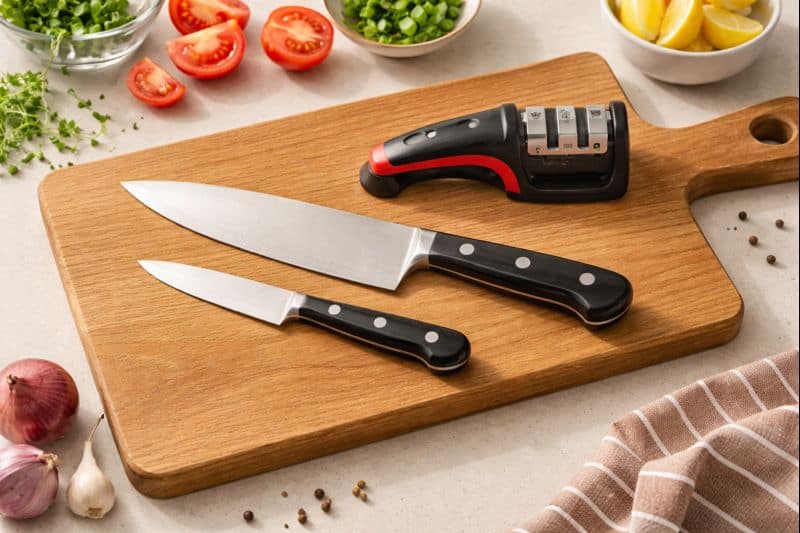
A simple 7-inch chef knife can cut onions, chop tomatoes, slice fruits, and prepare dough vegetables—making it perfect for students, renters, and first-time cooks.
How to Choose the Right Knife Based on Your Kitchen Needs?
Pick a knife based on what you cook most often. If you cut large vegetables like cabbage or pumpkin, choose a wider chef’s knife. If you handle mostly fruits or soft vegetables, a smaller utility knife works better. According to user reports, comfort and grip matter more than brand name.
Beginner Scenarios
If you are a student:
- Start with 1 chef knife + 1 paring knife
If you cook Indian meals daily:
- Choose a medium-weight 7-inch chef knife
If you want the safest option:
- Pick a knife with rounded edges and an anti-slip grip
Signs You’ve Chosen the Right Knife
- It feels stable
- It doesn’t slip
- It cuts vegetables smoothly
- Your wrist doesn’t feel strained
Conclusion
For beginners, a medium-sized chef’s knife or utility knife is the most practical and affordable choice. These knives handle most Indian cooking tasks and don’t require expert skills. Focus on grip comfort, blade material, and ease of use—not complicated professional features.
Start small, choose a safe good-quality knife, and upgrade only when your cooking skills improve.
Disclaimer: This article shares general troubleshooting information, not official support guidance.
Frequently Asked Questions
Q. What is the best kitchen knife size for beginners?
A. Most beginners find a 6–8 inch chef’s knife the easiest to control. It’s versatile enough for chopping, slicing, and dicing without feeling too heavy or oversized.
Q. Are budget knives good enough for daily cooking?
A. Yes. Budget stainless steel knives work very well for everyday cooking tasks. They just need regular cleaning and occasional sharpening to stay effective.
Q. Should beginners buy a knife set?
A. Not necessarily. It’s better to start with one good chef’s knife. You can add a paring knife later if needed. Large knife sets can be overwhelming for beginners.
Q. How often should a beginner sharpen their knife?
A. About once every 3–4 weeks for regular home use. A simple handheld knife sharpener is usually sufficient for beginners.