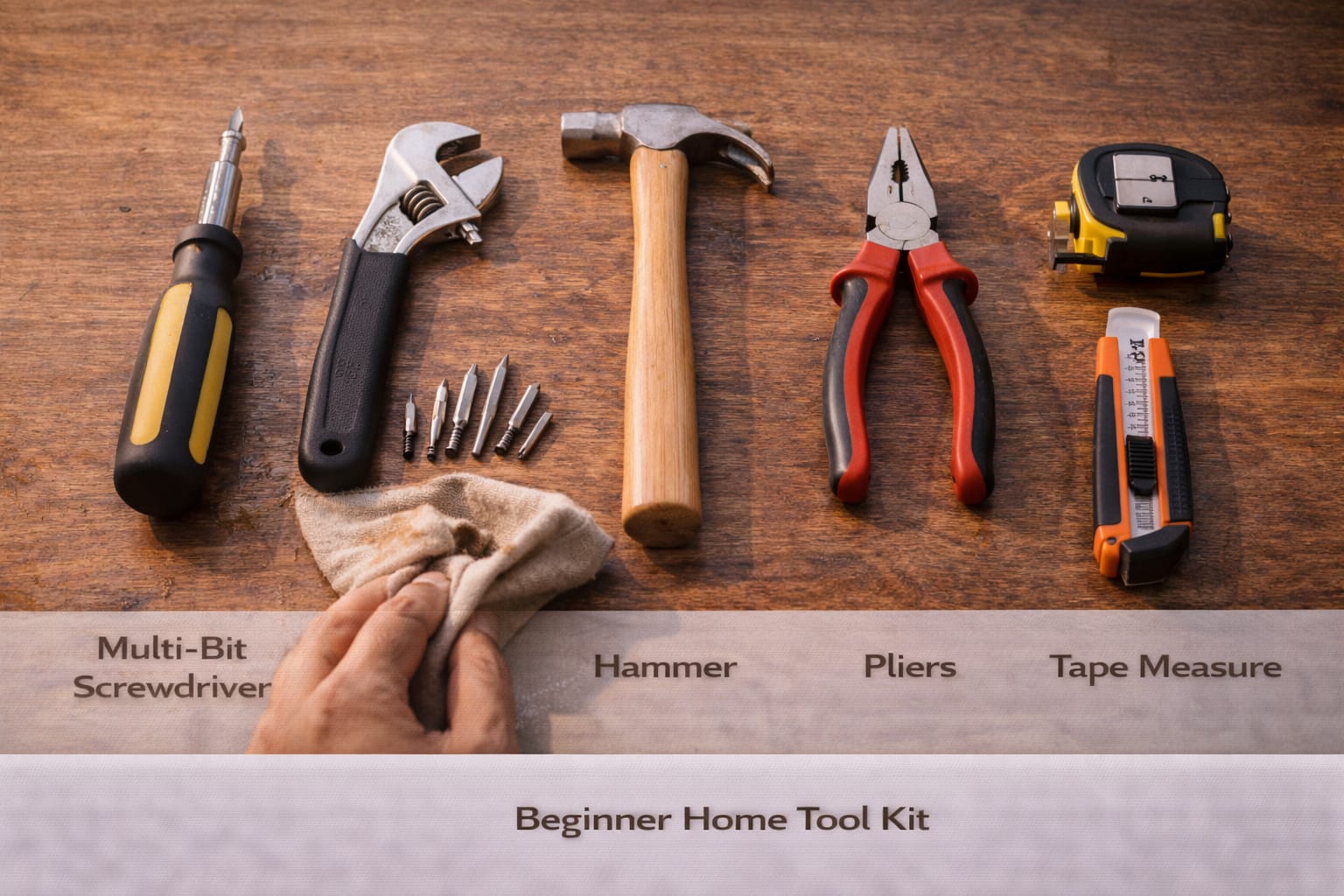
If you’re setting up your first home, it’s hard to know which tools you actually need. This guide solves that problem with a simple, beginner-friendly list of tools that help you fix small errors, tighten loose parts, assemble furniture, and handle quick kitchen repairs. Each section works like a troubleshooting tutorial, showing you what to buy, why it matters, and how to use it step-by-step.
Why new homeowners buy the wrong tools
New homeowners often buy advanced tools they don’t need, skip essentials like screwdrivers or pliers, or rely entirely on apps and online tutorials without having basic equipment. Based on user reports, confusion usually happens because there’s no clear, simple list of beginner home tools to buy for everyday fixes.
Common reasons:
- Not knowing which tools solve common household issues
- Buying complex power tools instead of simple starter tools
- Missing kitchen essentials needed for quick repairs
- Trying to fix things without the correct tool
- Over-relying on “without tools” hacks found online

Step-by-Step Fixes for Choosing the Right Beginner Tools
To build a beginner tool set, start with items that fix the most common home issues—loose screws, furniture assembly, small leaks, kitchen adjustments, and electrical checks. Follow these steps to avoid overspending and make sure you always have the right tool when something breaks.
1. Start With a Multi-Bit Screwdriver (Solves 80% of quick fixes)
- Use for tightening handles, outlets, cabinet hinges, and appliances.
- Choose one with interchangeable Phillips and flat-head bits.
- If this tool does not fit, try a precision screwdriver for electronics or kitchen devices.
2. Add an Adjustable Wrench for Plumbing & Furniture
- Fix wobbly chairs, sink nuts, shower heads, and appliance connections.
- Works as an “all-size” solution for beginners.
3. Get a Basic Hammer for Assembly & Small Repairs
- Hang frames, fix loose nails, or open stuck lids safely.
- Choose a lightweight, rubber-grip hammer for better control.
4. Use Needle-Nose Pliers for Tight Spaces
- Helps with bending wires, gripping small screws, or pulling staples.
- Useful for kitchen gadgets, light fixtures, and drawer repairs.
5. Buy a Tape Measure for Accurate Sizing
- Avoid errors when installing shelves or ordering appliances.
- Common method: measure twice before drilling or assembling.
6. Beginner Kitchen Tools to Include
- Utility knife: Opens packages and trims materials.
- Rubber mallet: Gentle fixes without damaging surfaces.
- Multi-purpose scissors: Good for DIY, packaging, and kitchen tasks.
🖼 Prompt 3: Step-by-Step Repair Scene (Tightening Cabinet Hinge)
Prompt:
“A beginner tightening a loose kitchen cabinet hinge using a multi-bit screwdriver. Hands only, focus on the tool and hinge, high detail, natural home lighting. Realistic instructional style suitable for a step-by-step repair tutorial.”

If Main Toolset Doesn’t Work
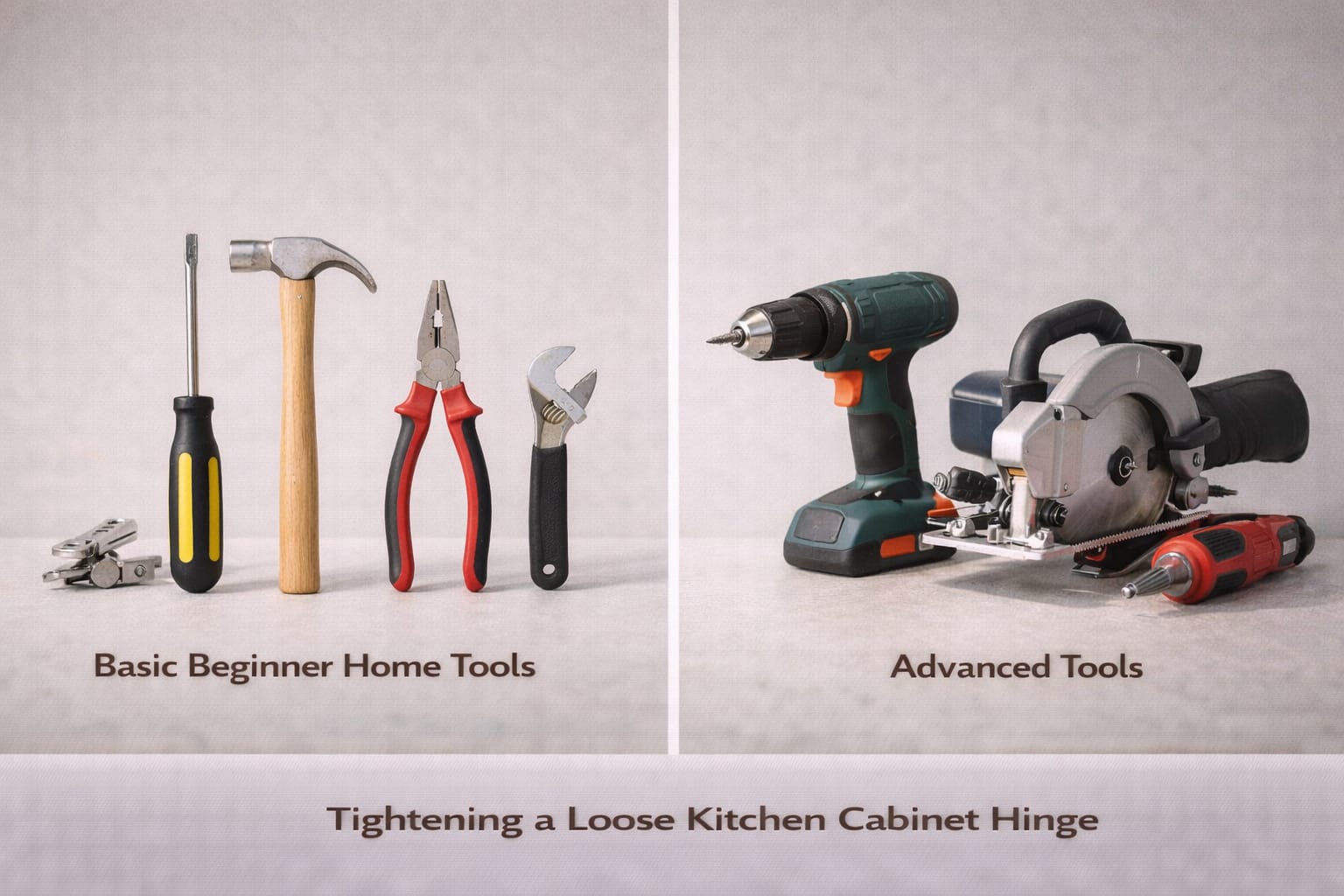
If basic tools aren’t enough for certain tasks, try easy alternatives like compact electric screwdrivers, web-based measurement apps, or repair tutorials without using power tools. These methods help you solve small issues without buying advanced equipment immediately.
Alternatives you can try:
- Use smartphone level/measurement apps for accuracy
- Buy a mini electric screwdriver for low-strength users
- Check online how-to tutorials for tool-free repair tricks
- Borrow or rent specialty tools instead of buying
How to Contact Official Support
If a tool breaks or an appliance won’t cooperate, follow the manufacturer’s support guidelines. Most brands offer troubleshooting pages, warranty claim forms, and chat support. Go to the brand’s Help Center or customer service section through their official website or app.
What you can access:
- Product manuals
- Warranty centers
- Replacement part requests
- Step-by-step repair tutorials
Conclusion:
Choosing beginner home tools does not need to be confusing. Start with versatile items—a multi-bit screwdriver, adjustable wrench, pliers, hammer, and measuring tape. Add a few kitchen-friendly tools, and you’ll solve most small home issues quickly and confidently. Begin small and upgrade only when needed.
Disclaimer: This article shares general troubleshooting information for choosing beginner home tools and does not represent official support guidance.
Frequently Asked Questions
Q. Why is the tool I bought not working for my repair?
A. This usually happens when the tool size doesn’t match the screw or fitting. Based on user reports, switching to a multi-bit screwdriver or an adjustable wrench solves most mismatches.
Q. Can I start a home tool kit without buying expensive equipment?
A. Yes. You can build a complete starter kit using simple hand tools. Many homeowners begin with just 5–7 essential items and add more only when needed.
Q. Is it possible to fix small home issues without buying tools?
A. Sometimes. You can use smartphone apps for measuring or follow tutorials that show tool-free fixes, but in the long term, having a basic tool kit makes tasks easier and safer.