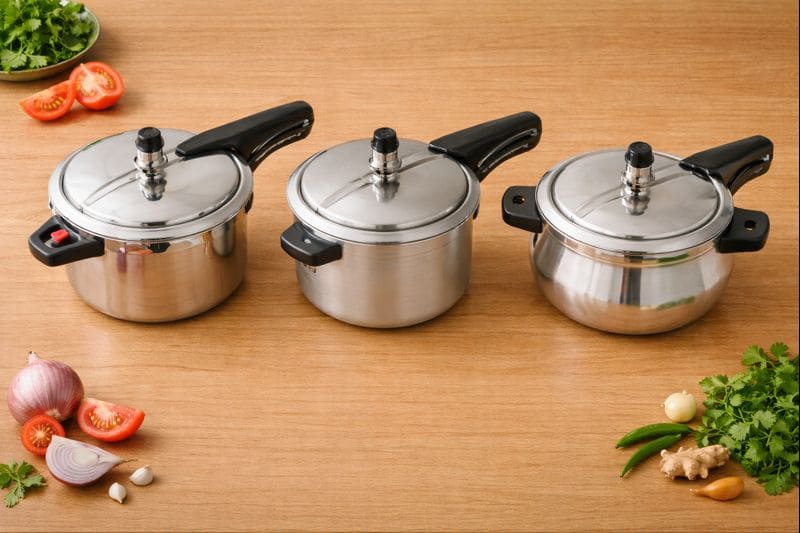
If you’re a small family of 2–3 people, choosing the right pressure cooker becomes important because it directly affects cooking time, food quantity, and safety. With so many materials, sizes, and designs available, it’s easy to get confused.
This guide breaks down the best pressure cooker for small families, using real user reports, practical comparisons, and beginner-friendly insights.
What Size of Pressure Cooker Is Best for 2–3 People?
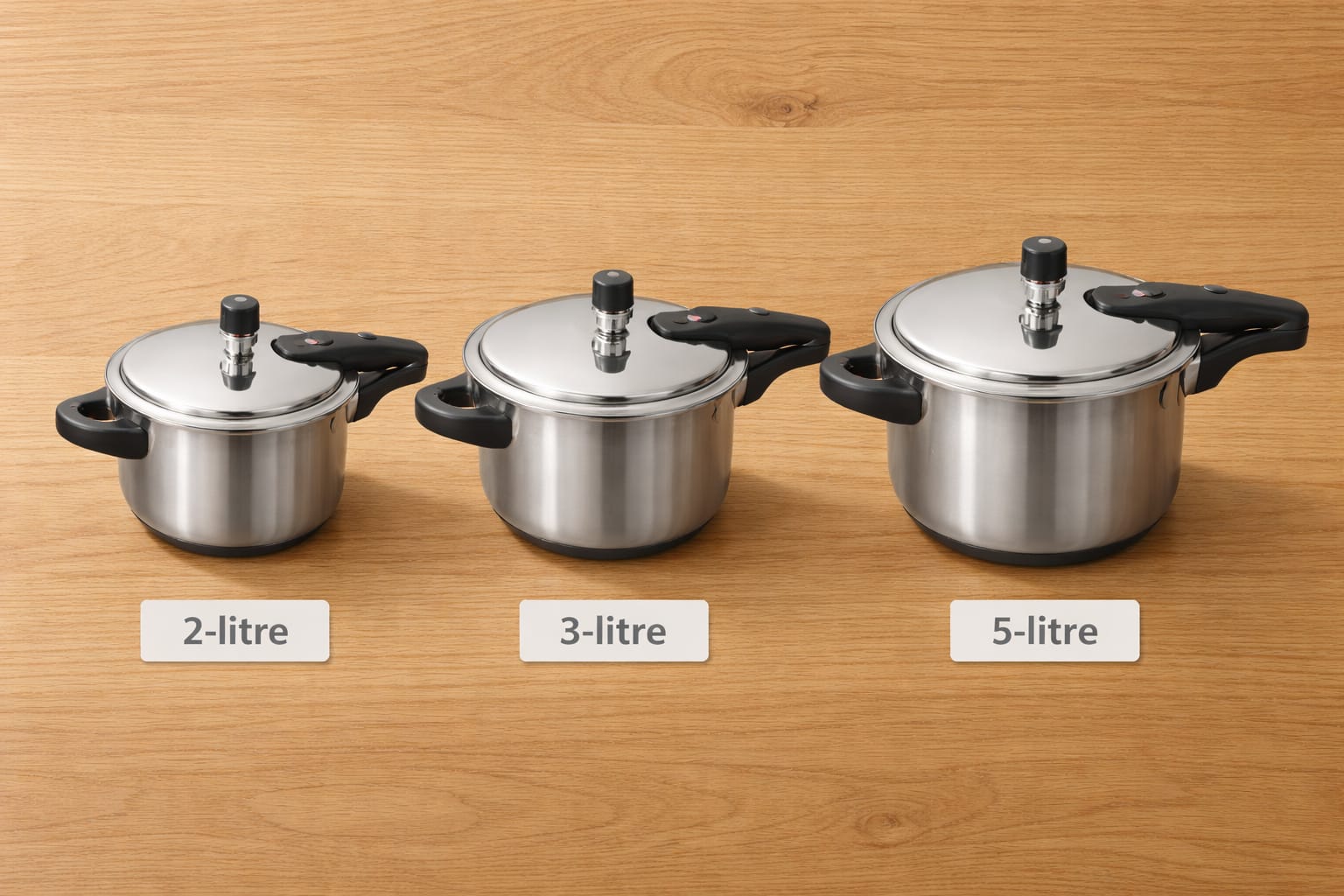
A 3-litre pressure cooker is generally the best size for 2–3 people. Based on user reports, it handles daily Indian recipes like dal, rice, vegetables, khichdi, and small curries without wasting fuel or taking up space. If you meal-prep or cook biryani occasionally, a 5-litre cooker as a second option works well.
Why 3 Litres Is the Sweet Spot
- Perfect for small portions
- Heats quickly
- Saves gas
- Not too bulky
- Ideal for everyday dal–rice cooking
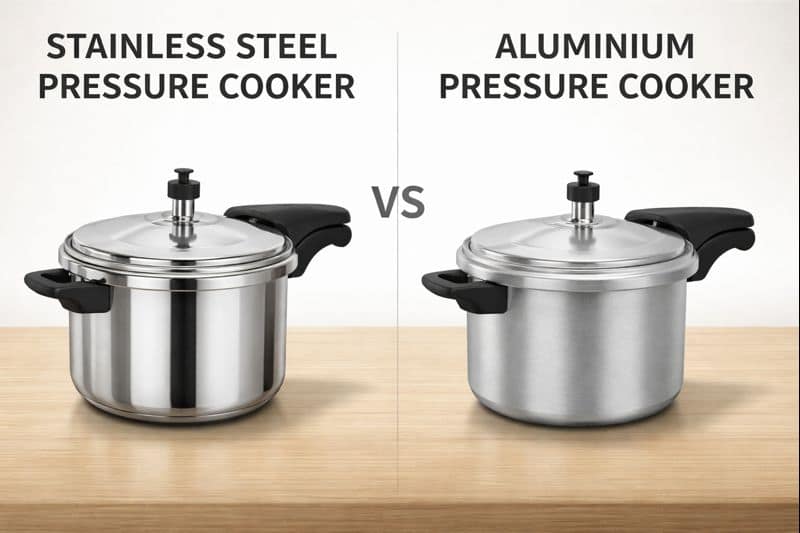
Is Aluminium or Stainless Steel Better for Small Families?
Stainless steel cookers are stronger and last longer, making them ideal for daily Indian cooking. Aluminium cookers are cheaper and heat faster but may wear out faster. According to support guidelines, stainless steel is preferred for long-term household use, especially for families cooking multiple times a day.
Aluminium Cooker Pros
- Lightweight and easy to handle
- Heats fast
- Budget-friendly
Stainless Steel Cooker Pros
- Very durable
- Food-safe and non-reactive
- Works better for heavy cooking
Real-Life Example
Families that cook dal, sambar, or rajma regularly report that stainless steel maintains shape and pressure better over years of use.
Which Pressure Cooker Type Is Most Beginner-Friendly?
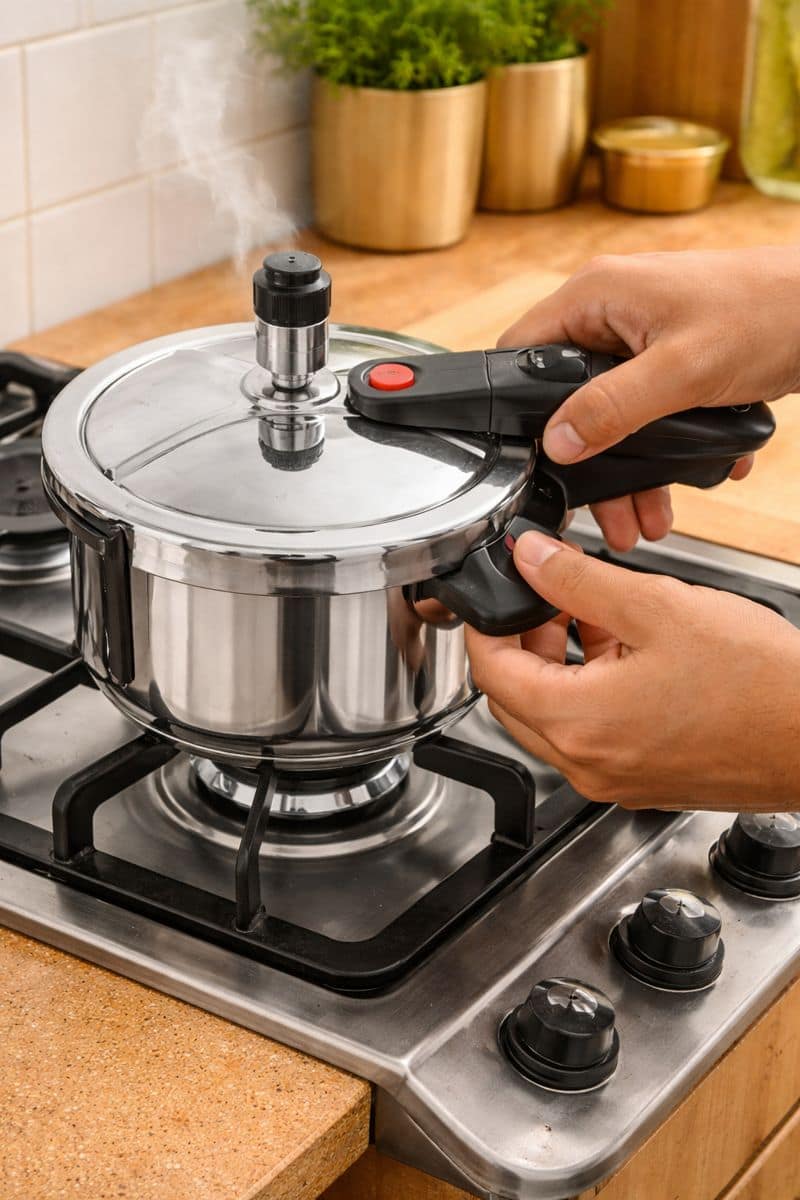
For beginners, an outer-lid pressure cooker is the safest and easiest to operate. It opens smoothly, avoids lid jamming, and gives better visibility. Inner-lid cookers are popular too, but outer-lid models tend to be more convenient for beginners learning basic Indian cooking.
Best Beginner Cooker Types
- Outer-lid cooker: Easiest to open and close
- Handi-style cooker: Great for biryani and gravy dishes
- Induction-base cooker: Works on both gas and induction stoves
Based on user reports
Outer-lid cookers cause fewer complaints about gasket leakage and lid fitting.
What Safety Features Should You Check Before Buying a Cooker?
Look for a cooker with strong build quality, a good safety valve, a proper gasket release system, and heat-resistant handles. According to support guidelines, BIS-certified cookers provide the safest pressure release mechanism, reducing the chance of accidents during daily cooking.
Important Safety Features
- Safety valve for excess steam
- Gasket release system for emergencies
- Anti-bulge base for uniform heating
- Cool-touch handles for safe gripping
- Thick base (3-ply or induction) for long life
Real Example
Most cooker issues begin with an old gasket. Replacing it every year prevents 70–80% of steam leakage problems.
How to Choose the Right Cooker for Your Cooking Habits?
Choose a cooker based on what you cook and how often. For simple dal–rice meals, a 3-litre stainless steel cooker is ideal. If you cook biryani, pulao, or large batches, consider a handi-style or 5-litre cooker. According to user reports, weight, handle comfort, and lid type matter more than brand.
If You Cook Twice a Day
- Choose a durable 3-litre stainless steel cooker
If You Cook One-Pot Meals
- Try a handi-shaped cooker for even cooking
If You Live in a PG or Hostel
- A 2.5–3 litre aluminium cooker is economical
If Your Kitchen Uses Induction
- Choose an induction-base cooker for flexibility
Conclusion:
For a small family of 2–3 people, the best pressure cooker is typically a 3-litre stainless steel outer-lid model. It’s safe, beginner-friendly, and perfect for daily Indian meals. Choose your cooker based on cooking style, safety features, and durability rather than brand marketing.
With the right cooker, your kitchen becomes faster, safer, and more efficient.
Disclaimer: This article shares general troubleshooting information, not official support guidance.
Frequently Asked Questions
Q. Which is the best pressure cooker for a small family?
A. A 3-litre stainless steel outer-lid pressure cooker is the most practical and durable option for a family of 2–3 people.
Q. Is aluminium safe for pressure cooking?
A. Yes, aluminium cookers are safe. However, they are better suited for occasional cooking, while stainless steel cookers are preferred for daily use.
Q. Should I buy a handi-style cooker?
A. Buy a handi-style cooker only if you frequently cook dishes like biryani, pulao, or gravies. For beginners, a regular 3-litre cooker is more versatile.
Q. What is the average lifespan of a pressure cooker?
A. A good stainless steel pressure cooker typically lasts 7–10 years if the gasket and safety valve are replaced regularly.