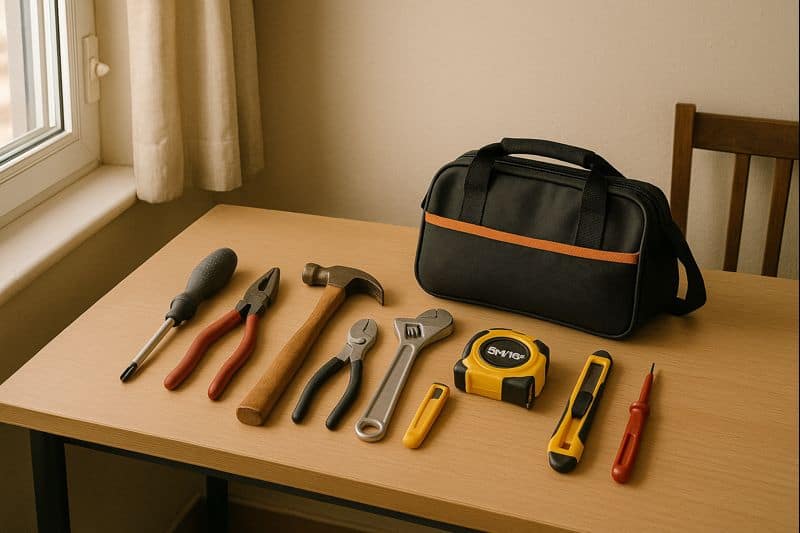
Moving into a rented room, student hostel, or first independent apartment in India means you’ll quickly face small repairs—loose cupboard screws, a stuck bathroom latch, wobbly chair, or a pipe leak. Instead of calling the landlord every time, a simple home toolkit lets you handle basic fixes confidently.
This guide explains the best home toolkit setup for beginners, especially for students and first-time renters who want to avoid unnecessary service calls and maintain their space smoothly.
Why Beginners Need a Home Toolkit
A basic toolkit helps you solve daily issues like tightening screws, adjusting furniture, fixing loose fittings, and assembling new items. For renters and students, it saves time, avoids technician charges, and prevents minor problems from becoming serious. You don’t need advanced skills—just simple tools and step-by-step guidance.
Common Issues First-Time Renters Face
- Loose cupboard or drawer screws
- Wobbly tables or chairs
- Needing to assemble Amazon furniture
- Leaking tap or shower head
- Drilling small holes for curtains or shelves
- Stuck bathroom locks
- Electrical board plate loosening
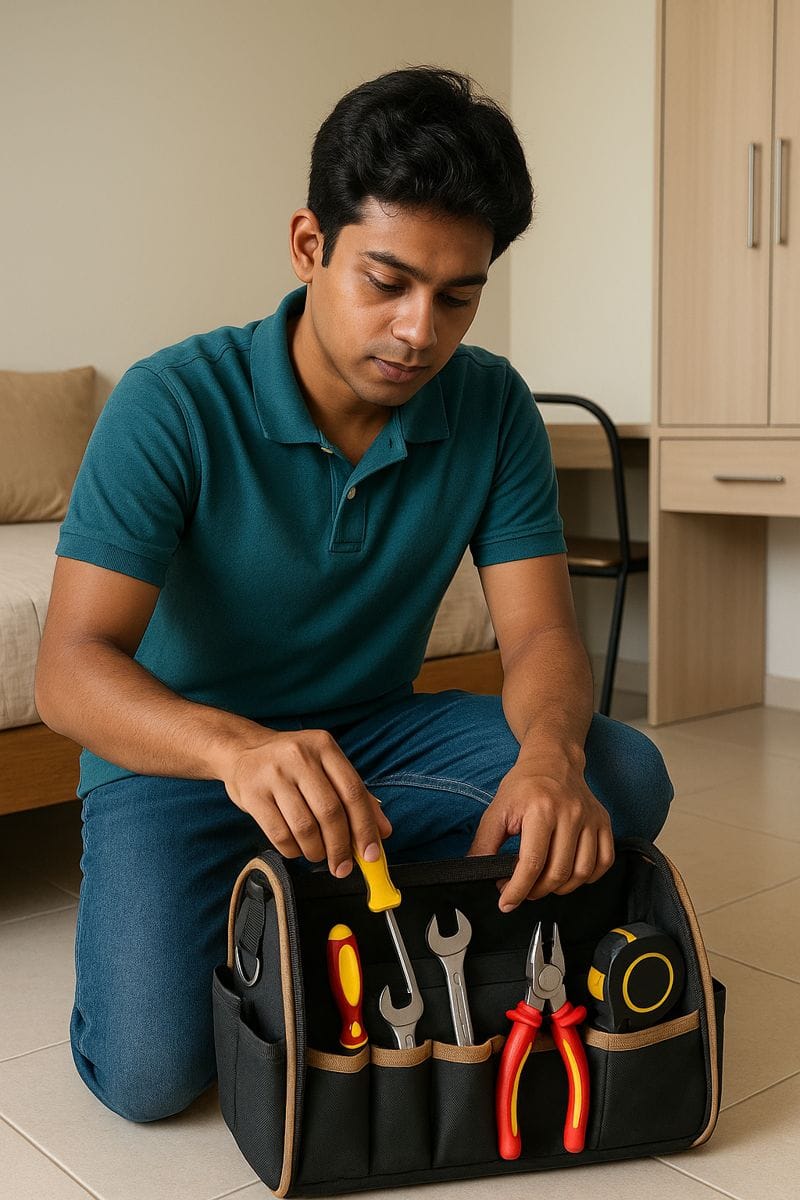
What is a Beginner Home Toolkit?
A beginner home toolkit is a basic set of hand tools designed for small household fixes. It usually includes a screwdriver set, hammer, pliers, measuring tape, adjustable wrench, utility knife, and optional drill. It’s compact, affordable, and ideal for renters or students without technical experience.
Essential Tools Every Beginner Should Have
Below is a complete, beginner-friendly list with practical Indian examples.
1. Multi-Bit Screwdriver Set
A multi-bit screwdriver solves most home issues—loose handles, switches, hinges, drawer tracks, and fan covers. It’s essential because it replaces 6–8 individual screwdrivers, perfect for small apartments.
Buy if you need to:
- Fix electrical switch plates
- Tighten furniture bolts
- Assemble study tables or racks
Pro Tip:
Choose magnetic bits; they hold screws better.
2. Adjustable Wrench (Spanner)
An adjustable wrench helps tighten taps, shower fittings, gas stove connections, and table nuts. Ideal for renters since plumbing issues are extremely common in Indian homes.
Common uses in India:
- Fix loose washbasin nuts
- Adjust leaky tap joints
- Tighten cycle nuts for students
3. Hammer (With Soft Grip)
A hammer is essential for simple tasks like hanging frames, tapping furniture joints, or pulling out bent nails. A soft-grip hammer ensures better control for beginners.
4. Needle-Nose & Combination Pliers
Why you need them:
- To grip tight screws
- To cut wires for LED light strips
- To fix loose metal parts on bags, cycles, or furniture
5. Measuring Tape (3m–5m)
A measuring tape prevents wrong purchases and wrong drill placements. You can measure curtain rods, furniture spacing, room dimensions, and shelf installations accurately.
6. Utility Knife / Cutter
Useful for:
- Opening Amazon packages
- Cutting insulation tape
- Trimming cardboard or plastic sheets
7. Basic Drill Machine (Optional for Beginners)
A drill is optional but helpful for curtain rods, wall shelves, hooks, or DIY projects. For renters, a low-power drill (450–550W) is enough. Always check with your landlord before drilling.
8. Safety Items
- Electrical tester
- Pair of basic work gloves
- Insulation tape for small wire fixes
- Mini torch or rechargeable lamp

Step-by-Step Guide to Setting Up Your First Toolkit
Setting up a beginner toolkit involves choosing essential tools, organizing them safely, and learning simple ways to use and maintain them. Start with 6–8 tools and expand only when needed.
Step 1 — Choose a Compact Tool Bag or Box
Why?
- Easy to carry
- Fits in small hostel rooms
- Protects tools from rust
Step 2 — Start With These 10 Core Tools
- Multi-bit screwdriver
- Hammer
- Adjustable wrench
- Pliers (2 types)
- Measuring tape
- Cutter
- Mini spirit level
- Tester
- Basic drill (optional)
Step 3 — Learn the Right Usage
A few practical Indian examples:
- Tightening a loose tap handle → adjustable wrench
- Fixing loose cupboard hinges → screwdriver
- Hanging wall décor → hammer + nails
- Assembling a Swiggy/Flipkart shelf → screwdriver + pliers
- Checking faulty switch → tester
Step 4 — Maintenance Tips for Toolkit
Maintenance ensures tools last longer and work smoothly. Wipe regularly, keep away from moisture, oil metal parts monthly, and store them in a sealed box. For humid cities like Mumbai or Chennai, add silica gel packets.

Pros & Cons of Building Your Own Toolkit
Pros
- Saves repair costs
- Quick fixes without waiting for help
- Makes rental life easier
- Great for students learning independence
Cons
- Requires basic learning
- Tools can rust without storage
- Drilling may not be allowed in every rental property
Mistakes Beginners Should Avoid
- Buying too many tools at once
- Choosing non-branded or weak metal tools
- Not storing tools properly
- Using wrong tools (e.g., knife instead of screwdriver)
- Ignoring basic safety
Conclusion
A well-planned home toolkit setup for beginners helps first-time renters and students manage daily fixes without stress. With just a few essential tools, you can handle most repairs, assemble furniture, and keep your space functional. Start small, choose quality tools, and upgrade only when needed.
Frequently Asked Questions
Q. What tools should be in a beginner home toolkit?
A. A basic toolkit should include a screwdriver set, hammer, pliers, adjustable wrench, tape measure, cutter, tester, and an optional drill. These tools cover around 90% of common household fixes.
Q. How much does a beginner toolkit cost in India?
A. A simple beginner toolkit usually costs between ₹900 and ₹1,700. If you include a drill, the cost can go up to ₹3,500, depending on the brand and local hardware store prices.
Q. Do students really need home tools?
A. Yes. Even in hostels or PG accommodations, small issues like loose screws, broken latches, or assembling shelves are common. A basic toolkit saves time and avoids paying service charges.
Q. Are power tools necessary for beginners?
A. No. Power tools are optional. For most renters and students, hand tools are sufficient unless you plan to hang shelves or do DIY décor work.