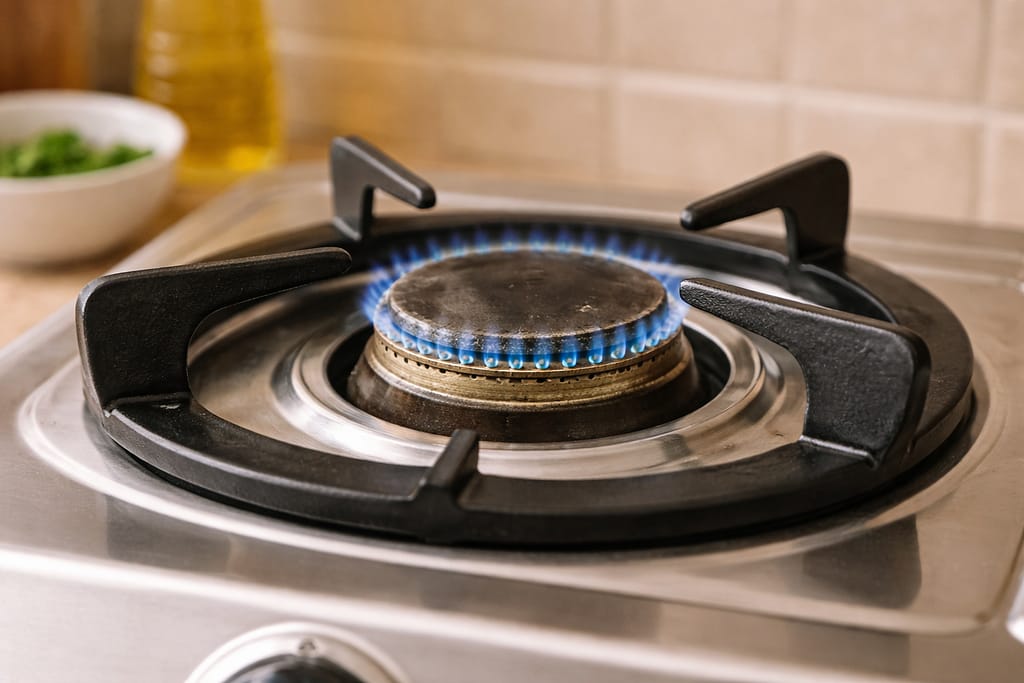
A low gas stove flame can slow down your cooking, waste gas, and create uneven heating. This issue is extremely common in Indian kitchens due to clogged burners, loose regulators, or simple maintenance problems.
In this guide, you’ll learn easy, safe, step-by-step solutions to fix a low flame at home without calling a technician.
Why Is Your Gas Stove Flame Too Low? (Common Causes)
A low gas flame usually happens due to clogged burner holes, a blocked gas pipe, loose regulator connection, moisture inside the burner, or low cylinder pressure. Based on user reports, most cases are solved by thorough cleaning and tightening connections. Only a few situations require technician support.
Common Reasons
- Burner holes clogged with food spills
- Moisture after washing burners
- Gas pipe bending or blockage
- Regulator not fitted securely
- Low LPG pressure during winter or near-empty cylinder
How to Clean the Burner Properly to Fix Low Flame?
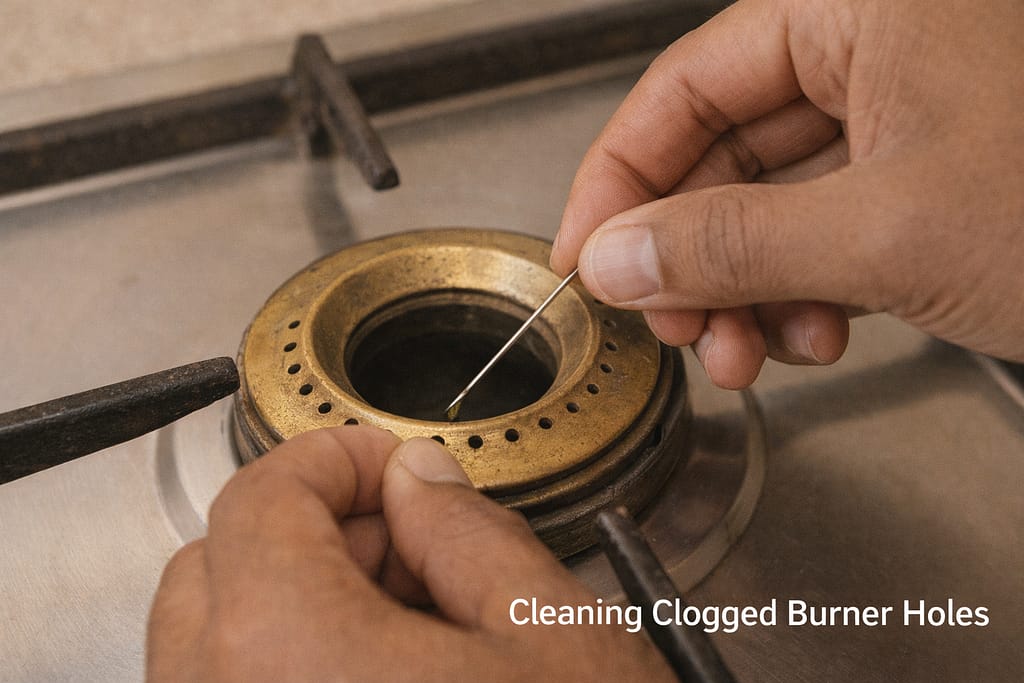
Cleaning the burner holes removes carbon, oil, and food residue that block gas flow. According to support guidelines, soaking the burner and brushing holes improves flame strength instantly. This is the most commonly used method to fix low flame problems.
Follow These Steps
- Remove the burner from the stove.
- Soak it in hot water + dish soap for 10–15 minutes.
- Use a brush or needle to clean each burner hole gently.
- Dry fully before placing it back.
- Test flame again.
Real-Life Tip
Never use sharp pins to poke holes too aggressively—this may enlarge the holes and cause uneven flames.
Is the Gas Pipe Blocked or Bent? How to Check?
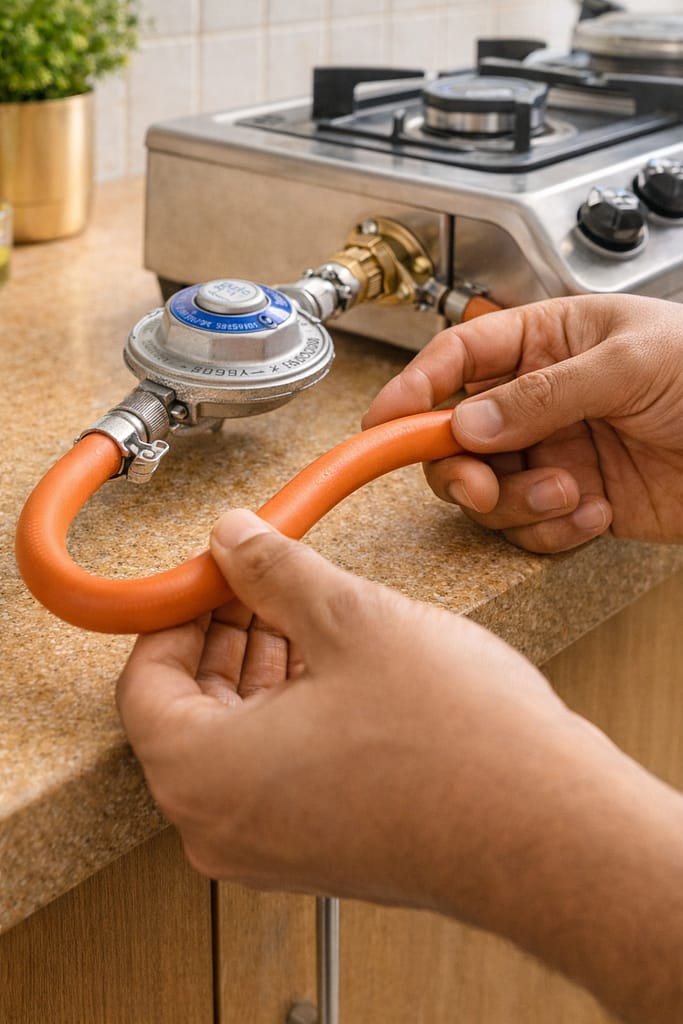
Gas pipe blockage slows down gas flow and reduces flame. A commonly used method is to check for bends, kinks, or insect buildup. Most low flame problems vanish once the pipe is straightened or cleaned.
Fix Steps
- Inspect the pipe for bends or tight curves.
- Straighten it gently without pulling.
- If the pipe is very old or turning white, replace it immediately.
- Ensure there is no food debris or dust near the pipe.
Real Example
Many homes report sudden low flame after shifting the stove, which accidentally bends the gas pipe.
What If the Regulator Is Loose or Faulty?
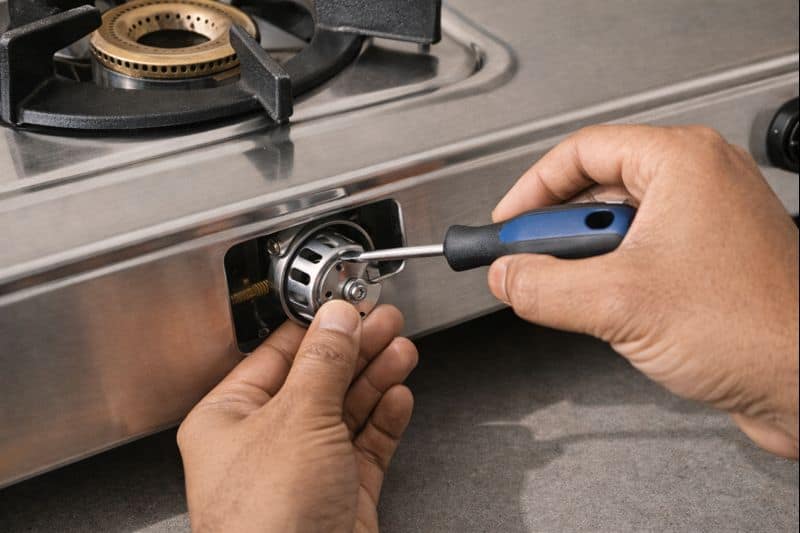
A loose or worn-out regulator disrupts gas flow and causes weak flame. According to support guidelines, ensuring a tight regulator connection and checking for leaks can restore proper flame in minutes.
How to Fix
- Turn off cylinder.
- Remove the regulator and reattach firmly.
- Check for a clicking sound (indicates proper locking).
- If flame remains low, try using another regulator to test.
Safety Note
If you smell gas, do NOT operate the stove. Turn off the cylinder immediately.
Could Low LPG Pressure Be the Issue?
Sometimes the cylinder itself has low pressure—especially during winter or when the cylinder is nearly empty. Based on user reports, low-pressure issues are common early morning and usually resolve once the cylinder warms up or is replaced.
How to Identify Low Pressure
- Flame is low on ALL burners
- Flame fluctuates without reason
- Cylinder feels extremely cold
- Happens early morning or in humid weather
Fix
- Try cooking after 15–20 minutes.
- If pressure stays low, replace the cylinder.
Conclusion
Fixing a low gas flame is usually simple—clean the burner, straighten the pipe, secure the regulator, and check LPG pressure. Most issues reported by homeowners are resolved with basic cleaning and connection checks.
Follow these steps one by one, and your stove should return to full flame quickly and safely.
Disclaimer: This article shares general troubleshooting information, not official support guidance.
Frequently Asked Questions
Q. Why is my gas stove flame suddenly very low?
A. This usually happens when the burner is clogged or the gas pipe is bent. These are the two most common reasons for a sudden drop in flame in Indian kitchens.
Q. Can clogged burners affect LPG consumption?
A. Yes. A low flame increases cooking time, which leads to higher LPG gas consumption.
Q. How often should I clean the gas stove burner?
A. You should clean the burners every 7–10 days to prevent carbon buildup and ensure an even flame.
Q. What if none of the methods work?
A. In that case, the gas regulator or LPG cylinder may be faulty. You should contact your LPG provider for inspection or replacement.